Plainfield NJ Historic Mansions: Inside the Queen City

Inside Plainfield’s Historic Mansions: Why Buyers Are Rediscovering New Jersey’s Queen City
Plainfield, New Jersey has an architectural story that is hard to miss. Across the city’s historic districts, stately Victorian residences, Queen Anne homes, Colonial Revival properties, Tudor Revival houses, and other period architecture reflect more than a century of local history.
For buyers who appreciate craftsmanship, substantial floor plans, period details, and homes with a strong architectural identity, Plainfield offers an interesting alternative within Union County. For homeowners thinking about selling, that history can also become an important part of how a property is prepared, presented, and marketed.

Why Is Plainfield Called New Jersey’s Queen City?
Plainfield’s growth is closely connected to the railroad and its development as an early commuter suburb.
By the late 19th century, the city was attracting residents from New York, and substantial homes began appearing along its residential streets. The history of the Van Wyck Brooks Historic District notes that the railroad connection helped establish Plainfield as a wealthy commuter suburb, with large residences constructed between approximately 1875 and 1925 in styles including Italianate, Second Empire, Victorian Gothic, Stick Style, Queen Anne, Shingle Style, Colonial Revival, and Tudor Revival.
That history remains visible today.
The City of Plainfield has also been referred to as the “Queen City of New Jersey,” a name tied to its growth and prominence during this period.

The Architecture Is Part of the Appeal
One reason Plainfield stands apart is the range of architectural styles found within a relatively compact area.
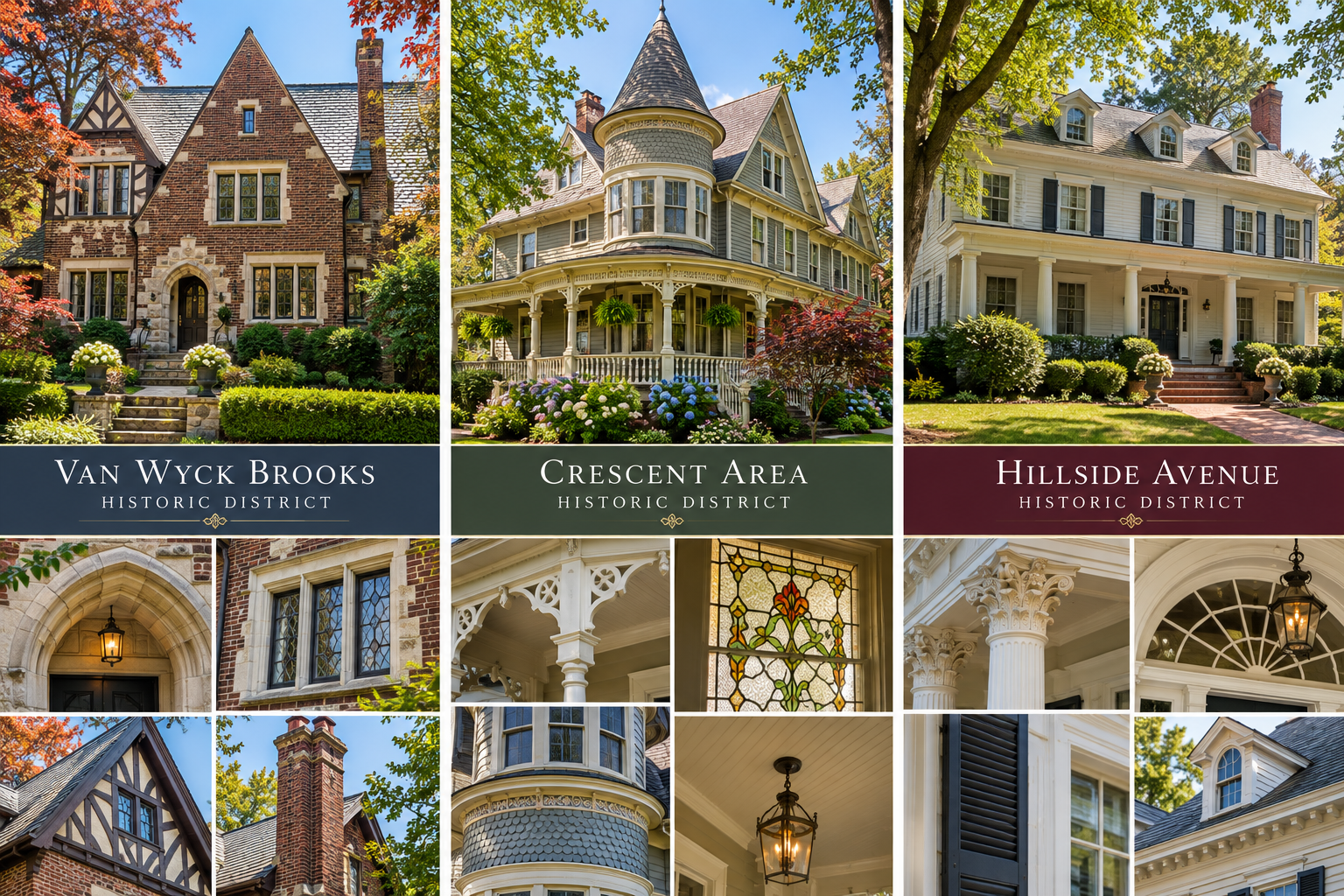
The Van Wyck Brooks Historic District alone contains 152 properties dating from 1803 through the 1960s and is the largest of Plainfield’s residential historic districts. It was locally designated in 1982 and later placed on the National Register.
Elsewhere in the city, the Crescent Area contains examples of Victorian architecture, including Italianate and Second Empire designs. Hillside Avenue is known for substantial homes built around the turn of the 20th century.
These properties can feature details that are difficult to reproduce in newer construction, from substantial millwork and decorative façades to generous room proportions, fireplaces, porches, distinctive rooflines, and carriage-house architecture.

Plainfield Takes Historic Preservation Seriously
Historic character is not simply a marketing description in Plainfield. Preservation has been part of local planning for decades.
Preservation New Jersey reports that Plainfield has more than 600 designated properties and 18 individually landmarked sites. The city was also among New Jersey’s earlier municipalities to receive Certified Local Government status, which connects local preservation programs with state and federal preservation resources.
That commitment helps explain why so much historic architecture remains part of Plainfield’s identity.
One notable example is the Nathaniel Drake House, constructed in 1746. According to the New Jersey Historic Trust, George Washington used the house to meet with officers during and after the Battle of Short Hills in 1777. Later renovations added Gothic Revival and Queen Anne elements, making the property an example of how Plainfield’s architecture changed over time.

Why Are Buyers Paying Attention to Plainfield?
There is rarely one reason someone chooses a home, but Plainfield presents several practical and architectural considerations buyers may weigh.
The city offers period architecture alongside access to regional transportation. Plainfield Station is served by NJ TRANSIT’s Raritan Valley Line, with service toward Newark and connections for New York travel. That can make transportation access an important practical consideration for buyers comparing locations across northern and central New Jersey.
Current housing data also shows an active local market. Redfin reported a Plainfield median sale price of approximately $540,000 for the three-month period ending in August 2026, with homes selling in about 32 days on average. Because historic homes can differ substantially in size, condition, renovations, lot size, and architectural significance, citywide figures should be treated as broad context rather than a valuation for any individual property.
Historic Homes Offer Something New Construction Cannot Replicate Easily
A century-old home is not automatically the right choice for every buyer. Older properties may require careful consideration of roofing, electrical systems, plumbing, heating, windows, foundations, insulation, and previous renovations.
Yet for buyers drawn to historic properties, those considerations may come with something they value greatly: architectural character.
High ceilings, detailed staircases, substantial moldings, fireplaces, broad porches, distinctive windows, formal rooms, and craftsmanship can give these homes a strong sense of identity.
The key is understanding both sides of the property. Buyers should look beyond appearance and evaluate condition carefully, while sellers should understand which original details are worth highlighting and which repairs or updates could improve presentation.

What Should Sellers of Historic Plainfield Homes Know?
Selling a historic property calls for a thoughtful approach.
A seller does not necessarily need to change everything to appeal to today’s market. In some cases, preserving original architectural details while addressing maintenance, lighting, paint, landscaping, and presentation can help buyers better appreciate what makes the property noteworthy.
Before listing, consider:
Identifying original architectural features worth highlighting
Reviewing repairs that could affect a buyer’s first impression
Checking whether the property is within a designated historic district
Understanding any local requirements that may apply to exterior alterations
Preparing rooms so architectural details remain visible
Using professional photography that captures scale, craftsmanship, and natural light
Pricing according to current comparable sales, condition, location, and property characteristics
Historic homes should not be marketed exactly like newer construction. Their story matters, but so do condition, presentation, pricing, and accurate property information.
Plainfield’s Historic Districts Give Buyers Plenty to Consider
Plainfield’s architectural identity extends well beyond a single street.
The Van Wyck Brooks Historic District is especially notable for late 19th and early 20th century residential architecture. The Crescent Area reflects development dating to the 1870s and includes Victorian styles. Hillside Avenue features substantial turn-of-the-century residences.
Together, these areas help preserve a visible record of how Plainfield developed from an earlier settlement into a significant commuter community.
For someone who appreciates architecture, a drive through these streets can feel very different from touring neighborhoods dominated by newer construction.
What Does This Mean for Plainfield Homeowners Thinking About Selling?
If you own an older or architecturally significant home in Plainfield, your property may have features buyers will not find in every listing.
The goal is to identify those features, determine what today's market is responding to, and present the property in a way that helps buyers understand both its character and practical value.
That starts well before the listing goes live.
Strategic preparation might mean refreshing selected rooms rather than completing a major renovation. It might mean making original woodwork a focal point, improving exterior presentation, or arranging furniture so buyers can better understand the scale of the rooms.
Every property requires its own plan.
Thinking About Selling Your Plainfield Home?
If you are wondering what your historic Plainfield property could sell for, or which improvements are worth making before you list, I can help you put together a clear plan based on your home, your timeline, and current market conditions.
As a lifelong New Jersey resident and real estate professional serving Union County and surrounding areas, I understand how much thought can go into selling a home with history and character. My focus is clear communication, thoughtful preparation, strategic pricing, and taking care of the details so the process feels manageable from start to finish.
Ready to talk about your selling goals? Contact me for a personalized home value and preparation consultation.
Christine Cederquist
Realty ONE Group
Phone: +1 908-380-3555
Email: CederquistRealty@gmail.com
FAQs
Does Plainfield, NJ have historic districts?
Yes. Plainfield has multiple designated historic districts containing architecture from different periods of the city’s development. The Van Wyck Brooks, Crescent Area, and Hillside Avenue districts are among the areas known for historic residential architecture.
Is Plainfield connected to New York by public transportation?
Plainfield Station is on NJ TRANSIT’s Raritan Valley Line. Service connects Plainfield with Newark, with New York service or connections depending on the train and schedule. Buyers should check current NJ TRANSIT schedules when planning a commute.
Do historic homes require more maintenance?
Maintenance depends on the individual property, its age, previous improvements, construction, and current condition. Buyers considering an older home should complete appropriate inspections and review major systems carefully.
How should I prepare a historic Plainfield home for sale?
Start by identifying the features worth preserving and highlighting. Then assess repairs, exterior presentation, lighting, paint, room arrangement, photography, and pricing. If the home is in a designated historic district, confirm applicable local requirements before planning exterior changes.