Plainfield NJ Development: Housing, Transit and Business Growth

What Is Changing in Plainfield, NJ?
Plainfield NJ development is increasingly centered around housing, transit access, downtown redevelopment, and support for local commerce. New residential projects are moving forward near the city's two rail stations, redevelopment plans continue to guide future construction, and downtown Plainfield has gained state support aimed at strengthening its commercial district.
For homeowners, buyers, investors, and business owners, these changes are worth watching. New construction does more than add apartments. It can bring additional residents closer to shops and services, create commercial space, encourage property improvements, and change how different parts of a city are used.
Plainfield's current activity is also not happening by accident. The city was designated a New Jersey Transit Village in 2014, a state designation for municipalities that have demonstrated a commitment to compact, mixed-use development around transit facilities.
New Housing Is Adding to Plainfield's Residential Options
Housing construction is one of the clearest signs of change.
In September 2026, a downtown development site at 314-322 East 4th Street changed ownership after receiving municipal approvals for a 68-unit apartment building with ground-floor commercial space, according to Real Estate NJ.
Another project at 401 East 3rd Street received a $60 million construction loan in 2025. Plans call for 266 apartments and about 10,000 square feet of ground-floor retail, less than half a mile from Plainfield Station.
Development is also occurring near Netherwood Station. Centurion Sleepy Hollow at 1222 South Avenue began leasing in 2026 with 100 apartments and ground-floor retail space.
These projects follow earlier transit-centered additions. A 2025 New Jersey Transit Friendly Planning report noted that developments completed in recent years included 120 apartments at 1000 North Avenue, 70 residences at Netherwood Flats, 90 affordable units at The Station at Grant Avenue, and the first 131-unit phase of Citivillage at Plainfield Station.
Why Is So Much Development Happening Near Transit?
Plainfield has something many New Jersey communities value highly: two NJ TRANSIT rail stations within the city.
Both Plainfield Station and Netherwood Station serve the Raritan Valley Line. Plainfield Station also connects with several NJ TRANSIT bus routes, while both stations provide parking and bicycle facilities.
Raritan Valley Line service connects Plainfield with Newark Penn Station, with connecting service available for New York. Schedules and service patterns can change, so commuters should always confirm current options directly with NJ TRANSIT.
This transit access has influenced how the city plans land around its stations.
Plainfield's TODD South Redevelopment Plan, for example, calls for more housing inventory near Plainfield Station, multifamily development, mixed uses, pedestrian improvements, and development of vacant or underused parcels.
That distinction matters. A redevelopment plan establishes what the city intends to permit or encourage in an area. It does not mean every project described or allowed by the plan has already been built.

Housing and Commercial Space Are Increasingly Appearing Together
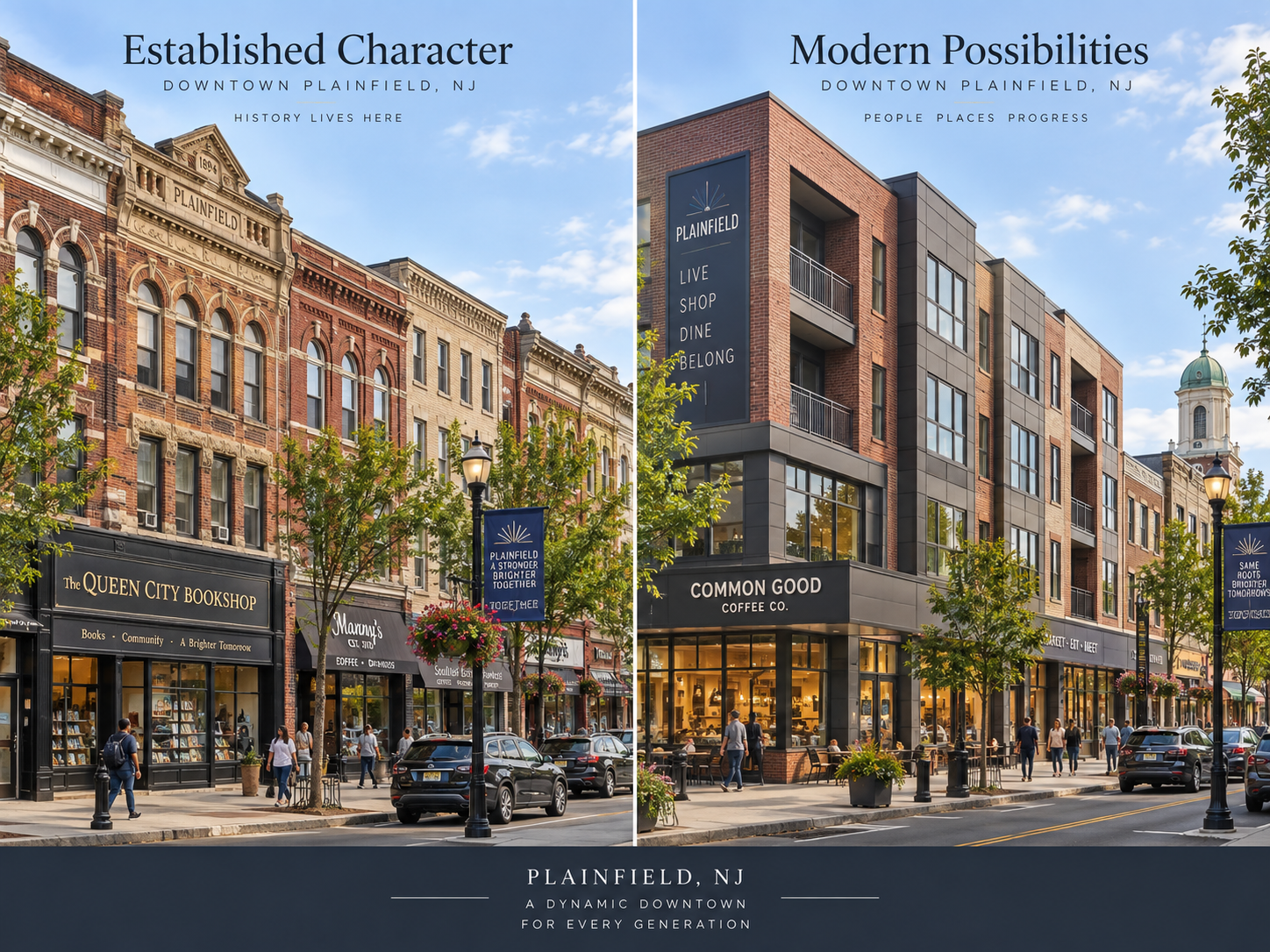
One of the notable patterns in current Plainfield development is the presence of mixed-use projects, where residential units and commercial space occupy the same property.
The planned 266-unit East 3rd Street project includes ground-floor retail. The approved East 4th Street project also includes commercial space at street level. Previous projects near the city's rail stations have followed similar patterns.
Why does that matter?
More homes near commercial areas can increase the number of people living close to restaurants, services, retail stores, transit, and other businesses. For commercial property owners and entrepreneurs, that can create new considerations around foot traffic, storefront use, services, and future space needs.
It does not guarantee success for individual businesses. Business performance still depends on location, demand, costs, competition, management, and many other factors. But changes in housing density can alter the customer base surrounding a commercial district.
Downtown Plainfield Is Receiving Additional State Support
Housing is only one part of the story.
In November 2024, Downtown Plainfield received Main Street New Jersey designation from the New Jersey Department of Community Affairs. The program provides designated districts with technical assistance and training intended to support commercial districts and public-private reinvestment.
Then, in August 2025, the Plainfield Central Business District Management Corporation received a $150,000 Main Street New Jersey grant.
According to the Department of Community Affairs, the funding was designated for projects including:
A mural installation
Hanging baskets throughout the district
Marketing support for businesses
Sign and façade grants
District banners
Business and visitor data tools
A maintenance vehicle for district operations
These initiatives show that attention is being given not only to new buildings but also to the streets, storefronts, commercial activity, and public-facing areas around them.

Plainfield Is Still Planning for More Development
The city's redevelopment activity remains active.
Plainfield's municipal code shows a long series of redevelopment actions adopted in 2024, 2025, and 2026, covering areas including TODD South, TODN North Avenue, Downtown East Front Street, West Front Street and Clinton Avenue, Myrtle Avenue, scattered city-owned parking lots, and homeownership small lots.
That does not mean every redevelopment plan will result in immediate construction. Development can depend on approvals, financing, environmental review, market conditions, infrastructure, and agreements between property owners and public agencies.
Still, the number of planning actions gives homeowners and investors a reason to pay attention to more than today's listings. Future land use near a property can matter too.
What Could These Changes Mean for Plainfield Homeowners?
For homeowners, redevelopment can raise practical questions.
Will additional housing affect buyer interest in a particular part of Plainfield? Will new commercial space bring more services nearby? Could future development change traffic patterns or the character of a block? How should a home near a redevelopment district be positioned when it goes on the market?
There is no single answer for every property.
A home near Plainfield Station may appeal to buyers who place a high value on transit access. A property near a commercial district may offer different conveniences. Homes farther from redevelopment activity may appeal to buyers for entirely different reasons.
That is why sellers should look at their specific property, recent comparable sales, current competition, condition, location, and nearby development rather than relying on a broad statement that development automatically raises or lowers home values.

What Should Buyers Watch?
Buyers considering Plainfield should look beyond the home itself.
Before making a purchase decision, it can be helpful to review:
Current zoning and nearby redevelopment areas
Recently approved residential or mixed-use projects
Access to Plainfield or Netherwood Station
Local shops, restaurants, parks, and services
Property taxes and expected ownership expenses
Recent comparable sales
Planned construction near the property
Municipal planning documents are especially useful when purchasing near a downtown or transit area. They can help a buyer understand what may be permitted nearby, although plans can be amended and individual developments remain subject to their own approvals.
What Should Real Estate Investors Watch?
For investors, added housing and commercial construction can create both opportunities and additional competition.
New rental properties may increase the number of available units, while new residents may support demand for commercial services. Investors should therefore study the individual property rather than making decisions based only on citywide growth.
Purchase price, realistic rent, taxes, insurance, maintenance, vacancy assumptions, financing costs, permitted use, and nearby construction should all be reviewed.
Investors considering commercial or mixed-use properties should also pay attention to Plainfield's Main Street initiatives and redevelopment plans, since they provide context about where public and private investment is occurring.
What Does Plainfield's Next Chapter Look Like?
The current evidence points to several changes occurring at the same time.
Plainfield is adding housing. Residential projects are being placed near transit. Mixed-use development is bringing homes and commercial space onto some of the same sites. Downtown programs are directing resources toward storefronts and public-facing improvements. And municipal redevelopment plans continue to shape where future construction may occur.
For current homeowners, that makes local knowledge increasingly important.
Selling a home is not just about looking at a citywide median price. Your home's condition, architecture, block, nearby amenities, transit access, competing listings, and surrounding development can all affect how buyers see it.

Thinking About Selling a Home in Plainfield?
If you've owned your Plainfield property for years, you may be looking around and wondering what all this development means for your home's value and your selling options.
I can help you look at the factors that matter specifically to your property, including recent nearby sales, current competition, buyer activity, presentation, pricing, and development happening around your location.
My goal is to give you clear information, answer your questions, and put together a selling plan that fits your timeline without adding unnecessary stress.
Curious what your Plainfield home could sell for in today's market?
Thinking about selling a Plainfield property, buying in the area, or wondering what recent development could mean for your home's value? Let's connect and look at the current numbers for your specific property and neighborhood.
Christine Cederquist
Realty ONE Group
Phone: +1 908-380-3555
Email: CederquistRealty@gmail.com
FAQs
Is Plainfield, NJ seeing new development in 2026?
Yes. Plainfield continues to see residential and mixed-use development, particularly near Plainfield Station and Netherwood Station. Current projects include new apartment communities, ground-floor commercial space, and redevelopment plans intended to guide future housing, retail, and public improvements.
Why is so much development happening near Plainfield's train stations?
Plainfield has two NJ TRANSIT stations on the Raritan Valley Line, Plainfield Station and Netherwood Station. The city has encouraged transit-centered development around these areas, including housing, commercial space, pedestrian improvements, and redevelopment of vacant or underused properties.
Is new housing being built in Downtown Plainfield?
Yes. Several residential projects have been approved, financed, completed, or placed into leasing near Downtown Plainfield and its transit areas. These projects include both apartment buildings and mixed-use properties with retail or commercial space on the ground floor.
Does every Plainfield redevelopment plan mean construction will happen?
No. A redevelopment plan identifies permitted or encouraged uses, but it does not guarantee that every proposed project will be built. Construction may still depend on approvals, financing, market conditions, environmental review, infrastructure, and agreements with property owners or public agencies.