New Jersey Real Estate 2027 Preview: Housing Market Outlook

New Jersey Real Estate 2027 Preview: What Today’s Market Could Mean for Next Year
Will 2027 be a better year to buy or sell a home in New Jersey?
With another year approaching, many New Jersey homeowners are wondering whether home prices will continue rising, whether more properties will become available, and whether mortgage rates will make the market easier or harder to enter.
The latest numbers give us a useful starting point.
In September 2026, New Jersey's median home sale price reached approximately $558,395, up 2.3% from the previous year. At the same time, housing inventory increased 9%, giving buyers more properties to consider.
According to Redfin's New Jersey Housing Market Report, these trends suggest that the state is moving toward a market with more choices for buyers, while many sellers continue to benefit from strong property values.
So, what does this mean for 2027?
The market may become more balanced in certain communities, but local inventory, mortgage rates, home condition, and pricing will remain major factors in determining results.
For homeowners in Union, Morris, Middlesex, Somerset, and Essex Counties, understanding these changes now can help make next year's real estate decisions feel more manageable.

What Is Happening in the New Jersey Housing Market Right Now?
New Jersey home prices are still increasing overall, but inventory is growing and sales activity has slowed compared with a year earlier.
According to Redfin's September 2026 housing data, the state's market showed the following:

These numbers tell an interesting story.
Almost half of homes sold above their asking prices, which indicates that buyer competition remains present.
However, the increase in available homes and price reductions suggests that buyers may be gaining more choices.
For sellers, the message is clear: homes can still sell at favorable prices, but preparation and an accurate asking price are becoming increasingly important.
Will New Jersey Home Prices Keep Rising in 2027?
Home prices could continue increasing in some New Jersey communities, but the latest figures do not support assuming strong appreciation everywhere.
September's statewide median price was 2.3% higher than one year earlier, according to Redfin.
That means values remain supported in the statewide market, although growth is more moderate than in periods of particularly rapid appreciation.
Several factors could influence home prices in 2027:
- The number of homes available for sale
- Mortgage rates and buyer purchasing power
- Employment and broader economic conditions
- Property taxes and ownership expenses
- Local construction and redevelopment
- Buyer demand within specific price ranges
- Property condition and location
New Jersey is not one uniform real estate market.
A detached home in Westfield may face different competition from a condominium in Morristown or a renovated Colonial in Plainfield.
Some towns may experience stronger demand and faster sales, while others may see more inventory and longer marketing periods.
What sellers should know: Do not base your home's estimated 2027 value solely on statewide appreciation figures. Recent local comparable sales are much more useful for pricing decisions.
Could Rising Housing Inventory Change the Market in 2027?
Yes. Increasing inventory is one of the most meaningful trends heading into next year.
In September 2026, Redfin reported approximately 32,962 homes for sale statewide, representing a 9% increase compared with September 2025.
More available homes can give buyers additional opportunities to compare prices, conditions, and locations.
That does not automatically mean New Jersey is becoming a buyer's market.
The state also recorded an average sale-to-list ratio of 101%, meaning sold homes collectively continued closing slightly above their asking prices.
However, the market may become more competitive for sellers who price well above comparable properties or list homes requiring considerable work.
For homeowners preparing to sell in 2027, it may be helpful to focus on:
- Reviewing current competing listings
- Understanding recent comparable sales
- Addressing visible maintenance concerns
- Preparing rooms for professional photography
- Choosing a realistic asking price
- Monitoring how quickly similar homes sell
A home that is properly prepared and presented may still attract strong interest even as buyers gain more choices.

Will Mortgage Rates Make Buying or Selling Easier in 2027?
Mortgage rates are one of the biggest uncertainties for next year's housing market.
On October 15, 2026, Freddie Mac reported that the average 30-year fixed mortgage rate was 7.40%, compared with 6.27% one year earlier.
Higher mortgage rates can affect how much buyers are able or willing to spend.
For example, consider a buyer financing a $500,000 home with a 20% down payment.
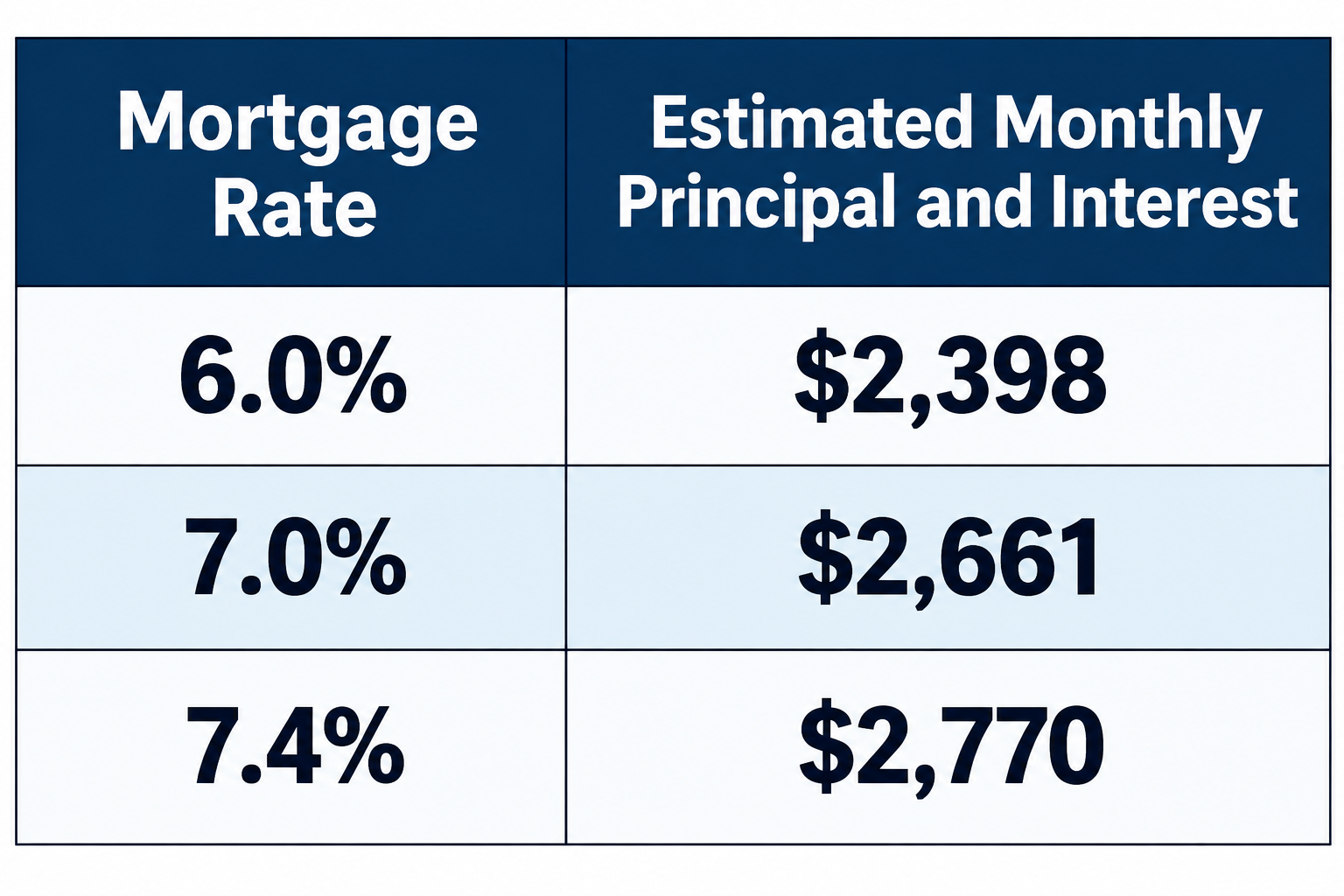
Illustrative calculation based on a $400,000, 30-year fixed mortgage. Excludes property taxes, insurance, HOA fees, and other expenses.
At 7.4%, that buyer would pay approximately $372 more each month than at 6%, even though the purchase price would remain unchanged.
For sellers, this matters because mortgage costs can directly affect buyer budgets.
If rates remain elevated in 2027, some buyers may focus on lower price ranges or seek concessions.
If rates decrease, purchasing power could improve, potentially encouraging additional buyers to enter the market.
Neither outcome is guaranteed.
What homeowners should consider: The best selling plan should work with current market conditions rather than depend entirely on mortgage rates falling next year.
How Could New Jersey's Housing Construction Plans Affect 2027?
New Jersey is also making a major effort to increase its housing supply.
On September 29, 2026, Governor Mikie Sherrill announced a comprehensive housing affordability strategy that identified the potential for approximately 40,000 homes on state-owned land, up from an earlier estimate of 20,000.
According to the New Jersey Governor's Office, the strategy includes development near transit, redevelopment of underused commercial properties, and efforts to shorten permitting timelines.
Some projects are already moving through the planning and development process, including transit-oriented proposals in Linden, Bayonne, and Red Bank.
However, this does not mean 40,000 homes will become available in 2027.
Large residential developments can take years to secure approvals, financing, and construction.
For existing homeowners, the effect will depend on the location and type of housing being built.
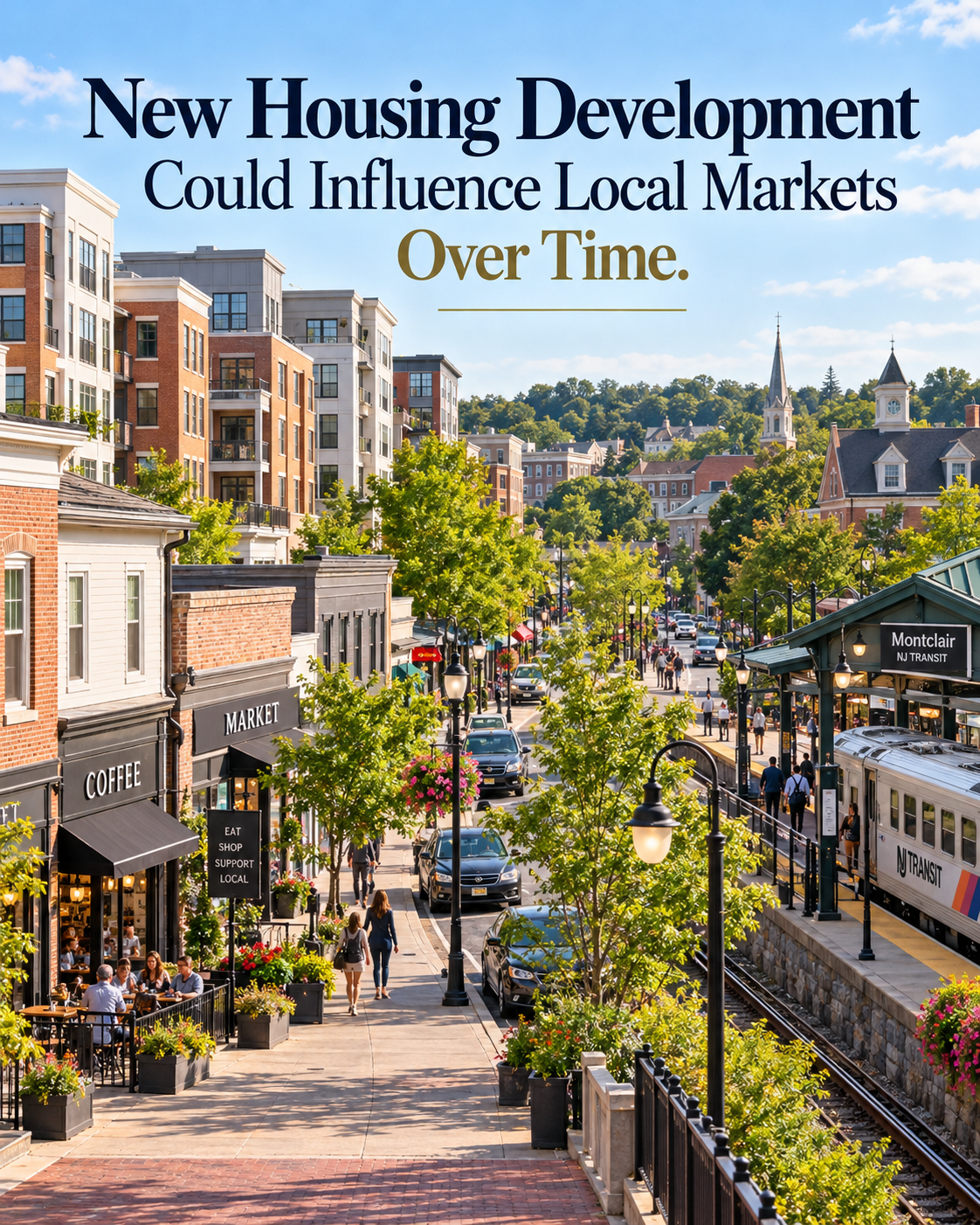
A new apartment development near a train station may have a different effect on the market than a new collection of detached houses or townhomes.
The bigger takeaway is that New Jersey is taking steps to address its housing shortage, and future construction may gradually change the choices available to buyers.
Will 2027 Be a Good Year to Sell a Home in New Jersey?
It could be a favorable year for sellers in communities where buyer demand remains strong and available inventory is limited.
In September 2026, 46.2% of New Jersey homes sold above asking price, according to Redfin.
That is encouraging for homeowners who are thinking about selling.
However, it does not mean every listing will receive multiple offers.
The growing number of available homes and price reductions suggests that buyers are becoming more selective.
For sellers, success in 2027 may depend increasingly on three important factors.
1. Pricing the Home Correctly
An attractive asking price should be supported by recent comparable sales and current market conditions.
Overpricing may cause buyers to overlook a property, particularly when comparable homes are available nearby.
2. Preparing the Property Before Listing
Thoughtful preparation can help buyers appreciate the home's condition and features.
That may include fresh paint, minor repairs, professional cleaning, decluttering, landscaping, and staging where appropriate.
3. Creating a Strong Marketing Plan
Professional photography, accurate property information, online exposure, showing coordination, and consistent communication all help support a well-organized sale.
The goal is to present the home clearly and attract buyers who recognize its value.
The most useful question for sellers is not simply whether 2027 will be a good year. It is whether their particular home is positioned well for the market at the time they list.
Should New Jersey Homeowners Sell Before 2027 or Wait?
There is no universal answer.
Selling before the end of 2026 could make sense for homeowners who are ready to move, have substantial equity, and are seeing strong demand for properties similar to theirs.
Waiting until 2027 may make more sense for those who need additional preparation time, want to complete important repairs, or have not yet made plans for their next property.
Before making a decision, ask yourself:
- What could my home realistically sell for today?
- How much equity do I have?
- What would I likely receive after selling expenses?
- What homes are currently competing with mine?
- What would my next housing arrangement cost?
- Would waiting improve my personal and financial position?
These answers are more useful than trying to predict the exact direction of the entire New Jersey market.
Selling a home is an important financial and personal decision, and good planning can reduce unnecessary stress.
What Could the 2027 Market Mean for Union, Morris, Middlesex, Somerset, and Essex Counties?
Local market conditions will continue to matter more than statewide averages.
These five counties include communities with very different housing styles, price ranges, transit connections, and levels of inventory.
For example, homeowners in Union County may be comparing markets such as Westfield, Scotch Plains, Cranford, Plainfield, and Summit.
In Morris County, properties in Morristown, Madison, Chatham, or Parsippany may face different buyer expectations.
Middlesex, Somerset, and Essex Counties also contain a wide variety of residential markets, ranging from condominiums and townhomes to established detached properties and higher-priced custom residences.
A home that is competitively priced in one location may face different conditions from a similarly priced property in another.
For homeowners preparing to sell, reviewing the following can be particularly helpful:
- Recent sales within the immediate market
- Available inventory in the same price range
- Property condition and recent renovations
- Average time required to secure an offer
- Buyer activity and competing listings
- Nearby construction or redevelopment
These details provide a clearer picture of what buyers may expect in 2027.
What Should New Jersey Buyers Expect in 2027?
Buyers may have more choices if inventory continues to increase.
That could allow additional time to compare properties, evaluate inspection findings, and consider the total cost of ownership.
However, buyers should not assume that increasing inventory means home prices will decline statewide.
Mortgage rates, property taxes, insurance, and local demand will continue affecting affordability.
A practical buying plan should begin with a realistic monthly housing budget rather than a purchase price alone.
Buyers may also want to consider property condition, anticipated repairs, transportation access, and long-term ownership expenses.
The right purchase is one that fits both current needs and financial plans.
What Are the Biggest New Jersey Real Estate Trends to Watch in 2027?
Looking ahead, several indicators deserve particular attention.
Home prices: September 2026 prices were still higher than a year earlier, but future appreciation could vary considerably by community.
Housing inventory: A 9% annual increase in available homes suggests buyers are receiving more choices.
Mortgage rates: The 7.40% average recorded in October 2026 continues to put pressure on purchasing power.
Buyer competition: Nearly half of September home sales closed above asking price, showing that competition remains present.
New construction: New Jersey's housing strategy could increase future inventory, although many proposed developments will take years to complete.
Together, these signals point toward a market where local knowledge, preparation, and realistic expectations may become even more important.
What Is the Overall Outlook for New Jersey Real Estate in 2027?
The current data suggests that New Jersey may enter 2027 with a housing market that remains active but increasingly sensitive to price, financing costs, and local competition.
For sellers, continued buyer interest and higher home values are encouraging.
For buyers, improving inventory may create more opportunities to compare properties.
But neither group should assume that every community will follow the same pattern.
The strongest approach for 2027 is to focus on what can be evaluated today: local comparable sales, property condition, housing costs, available inventory, and personal timing.
Homeowners do not need to predict the future perfectly to make a well-informed decision.
They need reliable information and a plan that makes sense for their situation.
Thinking About Selling Your New Jersey Home in 2027?
If selling your home is on your mind, you may be wondering whether to list before the end of 2026 or prepare for the coming year.
As a lifelong New Jersey resident and real estate professional, I understand how much thought goes into deciding when to sell.
My priority is to help homeowners feel informed, supported, and confident throughout the process.
I work with sellers throughout Union, Morris, Middlesex, Somerset, and Essex Counties, providing guidance on pricing, home preparation, presentation, marketing, and negotiation.
Together, we can look at what is happening in your local market, review your home's potential value, and discuss a selling timeline that supports your goals.
Curious what your New Jersey home could sell for as we head into 2027? Let's connect for a personalized home-value and market review. I'm here to help you plan your next move with confidence.
Christine Cederquist
Realty ONE Group
Phone: +1 908-380-3555
Email: CederquistRealty@gmail.com
Market statistics are based on publicly available information through October 19, 2026. The 2027 discussion describes possible outcomes, not guaranteed predictions. Housing prices, mortgage rates, inventory, and individual property values can change.
FAQs
Will New Jersey home prices go down in 2027?
There is no reliable way to guarantee statewide price declines. Redfin reported that New Jersey's median home sale price increased 2.3% year over year in September 2026. Future prices will depend on supply, buyer demand, mortgage rates, and local market conditions.
Is New Jersey still a seller's market heading into 2027?
Many communities remain competitive. In September 2026, 46.2% of New Jersey homes sold above their asking prices. However, increasing inventory suggests sellers may face more competition in certain locations.
Will mortgage rates be lower in 2027?
Mortgage rates are uncertain. Freddie Mac reported a 7.40% average 30-year fixed mortgage rate on October 15, 2026. Inflation, bond markets, and economic conditions will influence future borrowing costs.
Is it better to sell a New Jersey home in late 2026 or wait until spring 2027?
The better timing depends on the homeowner's financial plans, property condition, local competition, and readiness to move. Spring may bring more buyer activity but can also bring more competing listings. A local market analysis can help inform the decision.