New Jersey Faster Building Permits: Will More Homes Follow?

New Jersey Is Making It Easier to Build: Could Faster Permits Bring More Homes to Local Communities?
New Jersey is taking steps to make building approvals faster and more predictable. With permit backlogs shrinking, a new public tracking system, and ambitious housing development goals, these changes could help more residential projects move forward. But what could that mean for existing homeowners and local real estate values?
If you own a home in Union, Morris, Middlesex, Somerset, or Essex County, you may already be hearing about new housing projects, redevelopment plans, or proposed apartment buildings in nearby communities.
These changes raise important questions.
Could faster permitting lead to additional housing choices? Will more construction affect what existing homes are worth? And should homeowners thinking about selling in 2027 adjust their plans?
As a lifelong New Jersey resident and real estate professional, I believe understanding local development is an important part of making confident real estate decisions.
Here's what homeowners should know about New Jersey's permitting changes and their potential impact on the housing market.

1. What Is New Jersey Doing to Make Building Permits Faster?
New Jersey is reducing long-standing permit backlogs, improving coordination among state agencies, and making the approval process more transparent for residential and commercial development.
On October 28, 2026, Governor Mikie Sherrill announced progress in the state's efforts to reduce permitting delays.
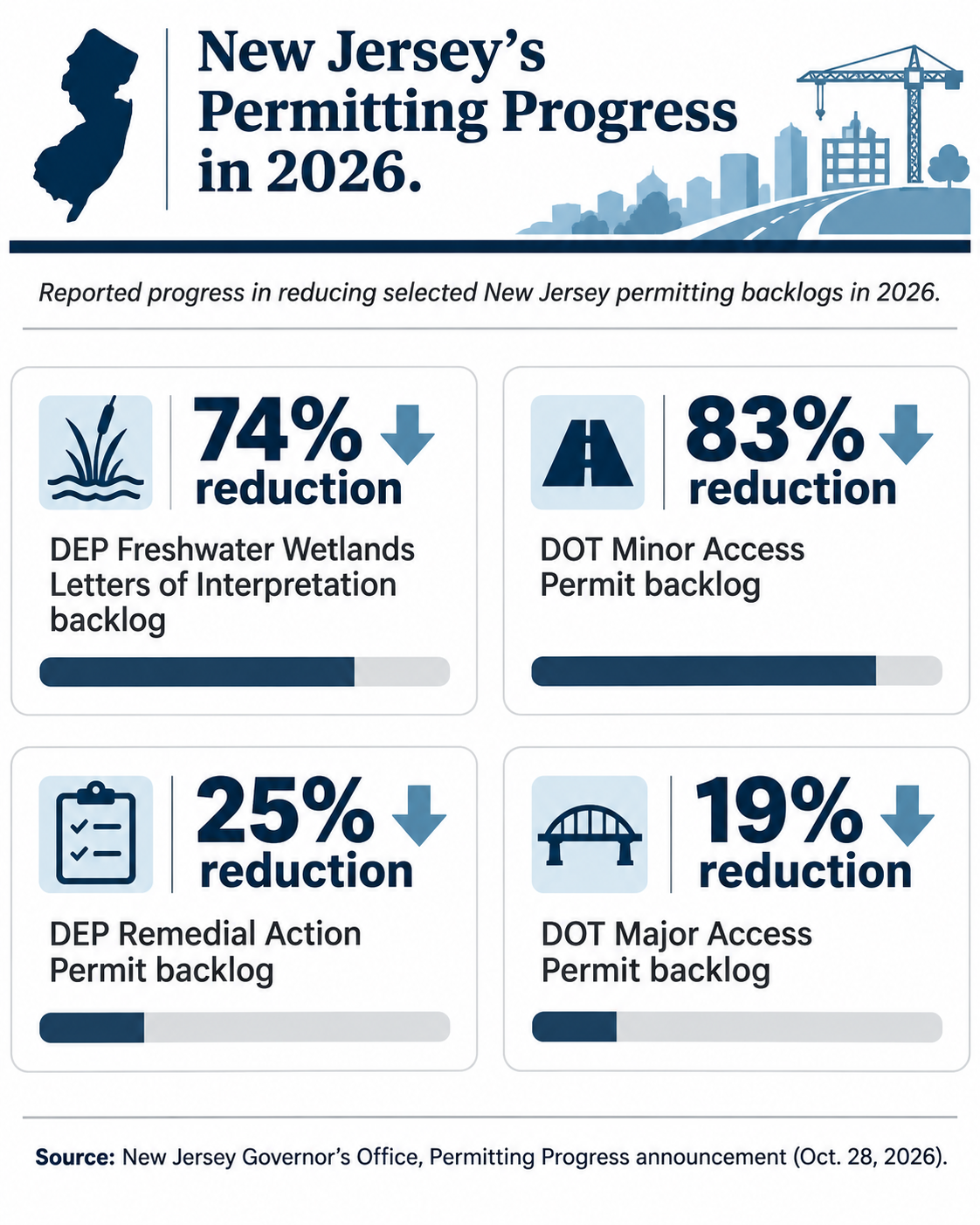
According to the official New Jersey Governor's Office announcement, several state agencies reported substantial reductions in backlogged applications since January 2026.
Here are four notable results:
- Freshwater Wetlands Letters of Interpretation: Backlog reduced by 74%
- Minor Access Permits: Backlog reduced by 83%
- Remedial Action Permits: Backlog reduced by 25%
- Major Access Permits: Backlog reduced by 19%
These permit categories serve different purposes.
Wetlands reviews help identify environmental conditions that may affect development. Access permits address entrances and driveways connecting properties with state highways. Remedial action permits relate to the management of certain previously contaminated sites.
Delays in these reviews can affect when developers are able to move ahead with design, site preparation, or construction.
The reported reductions are meaningful because they show progress in resolving pending applications.
However, these numbers describe changes in permit backlogs, not increases in completed homes.
For homeowners, the important takeaway is that New Jersey is working to remove some of the administrative delays that can slow residential development.
2. How Does the New Jersey Permitting Dashboard Work?
The state has introduced a public online dashboard that allows residents and developers to follow selected projects as they move through the permit review process.
The New Jersey Permitting Dashboard is part of a larger effort to improve transparency and coordination.
The pilot launched in June 2026, with a public-facing version announced on October 28.
According to the Governor's permitting progress update, the dashboard initially tracks 10 pilot projects involving reviews by the Department of Environmental Protection, Department of Transportation, and Department of Community Affairs.
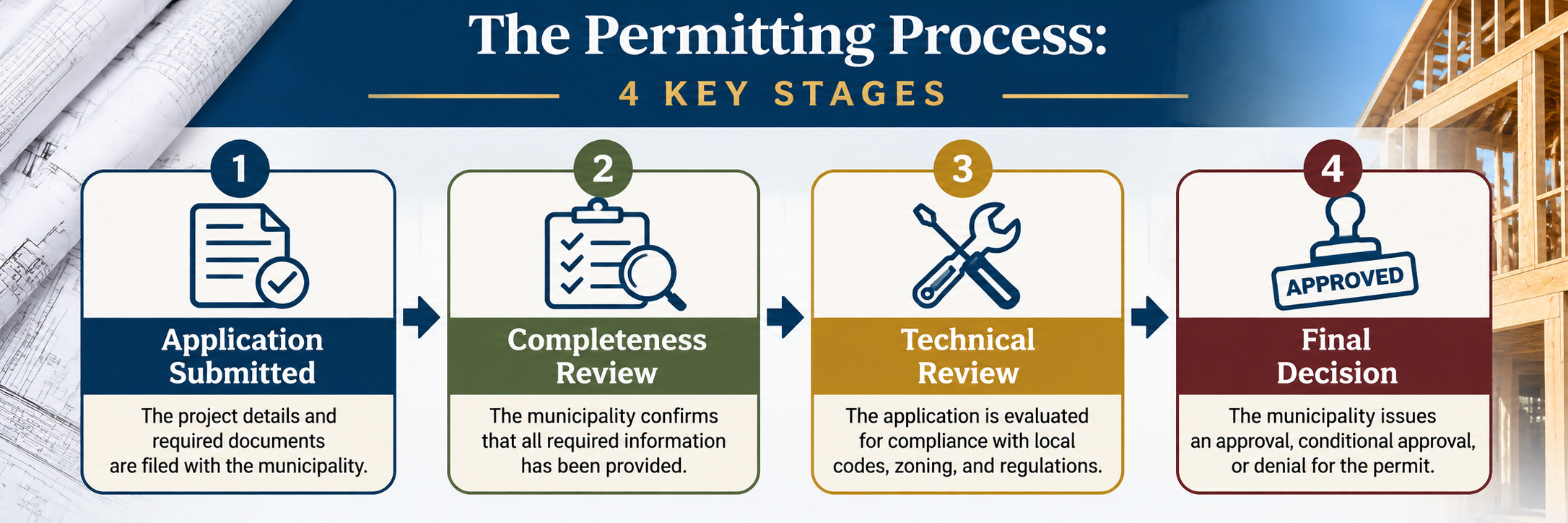
For participating projects, it displays information such as:
- Permit applications submitted
- The responsible reviewing agency
- Application completeness reviews
- Technical review progress
- Final decisions and milestone dates
This gives the public greater visibility into the approval process.
Previously, it could be difficult for residents to understand why certain projects remained under review for extended periods.
A publicly accessible tracking system may make it easier to follow progress and identify outstanding steps.
It's important to remember that the dashboard is still a pilot. It does not currently provide a complete record of every building permit or residential project across New Jersey.
For homeowners interested in nearby development, it can be a helpful resource alongside local municipal planning and zoning records.
3. Why Does Faster Permitting Matter for New Jersey's Housing Supply?
Reducing approval delays could help developers move eligible housing projects toward construction more quickly, potentially increasing the number of homes available over time.
Building a residential property involves more than purchasing land and hiring contractors.
Developers may need zoning approvals, environmental reviews, infrastructure assessments, financing, and construction permits before work can begin.
According to the New Jersey Housing Governing Council, the state is working to make housing development approvals clearer and more predictable.
The state's September 2026 housing strategy identified approximately 350,000 additional homes as a long-term need to address housing supply and future demand.
Governor Sherrill also announced an expanded goal of developing approximately 40,000 homes on state-owned land.
That goal was part of the September 29, 2026 statewide housing announcement.
Faster permitting may help support these efforts, particularly when projects have already secured suitable land and financing.
However, faster permits are only one part of the development process.
Construction costs, labor availability, borrowing costs, municipal approvals, infrastructure capacity, and market demand can all influence whether a project moves forward.
More predictable approvals may help projects progress, but they do not guarantee that every proposed development will be completed or that new homes will become available immediately.
4. Could Faster Permits Encourage More Development in Union County and Nearby Areas?
Communities with available development sites, established transportation connections, and approved residential plans may be among those that benefit from more predictable state review timelines.
Across northern and central New Jersey, municipalities are considering different ways to accommodate housing development.
Some projects focus on apartments near train stations.
Others involve redevelopment of underused commercial parcels or construction on vacant land.
For example, the state has identified transit-oriented housing initiatives in Linden, a Union County community with NJ TRANSIT rail access.
The Governor's September 2026 housing announcement also identified housing development efforts in Bayonne and Red Bank.
These initiatives illustrate the state's interest in placing additional housing near transportation and existing infrastructure.
For homeowners in Union County, projects in places such as Linden and Plainfield may be worth following.
Residents of Morris, Middlesex, Somerset, and Essex Counties may also want to monitor local redevelopment proposals and municipal planning decisions.
Still, statewide permitting reforms do not mean every town will experience the same level of construction.
Each community has different land availability, development requirements, infrastructure, and housing needs.
That is why local information remains essential when evaluating possible changes to property values.
5. Could More New Construction Affect Existing Home Values?
Additional housing supply could influence property values, but faster permitting and new construction do not automatically mean existing homes will become less valuable.
Home prices depend on several factors, including buyer demand, available inventory, mortgage rates, property condition, and location.
When more housing becomes available, buyers may have additional choices.
That could create more competition for existing homes, particularly when newly constructed properties offer similar layouts, amenities, and price points.
However, not every new development competes directly with the existing single-family housing market.
A new apartment building may serve a different segment of the market than a detached Colonial home with a yard and driveway.
Meanwhile, existing homes can offer features that some buyers specifically value, including:
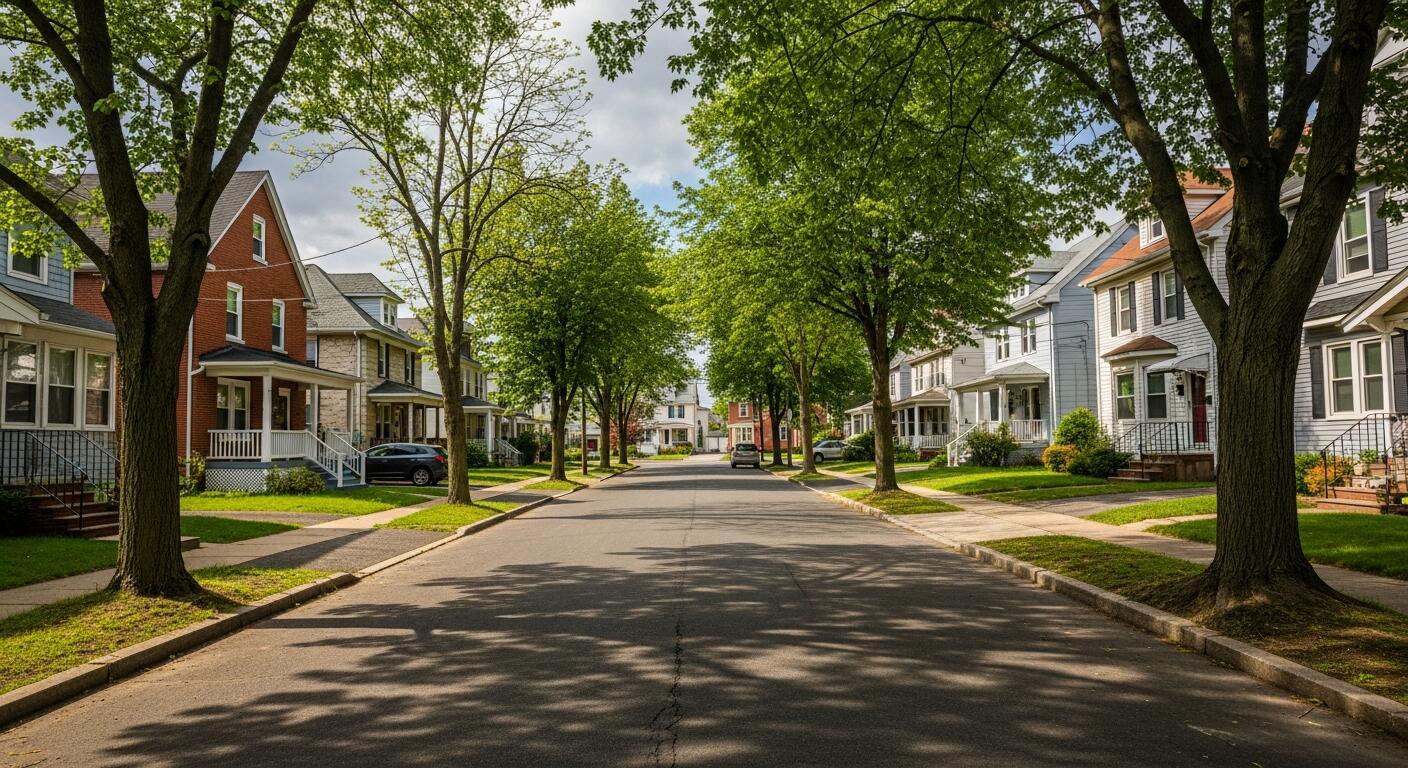
- Established landscaping and mature trees
- Traditional architectural details
- Renovated interiors
- Outdoor entertaining areas
- Flexible living spaces
- Convenient access to existing shops, parks, and transportation
New construction may also bring additional commercial activity or infrastructure investment to certain locations.
Those changes could influence how buyers evaluate nearby properties.
However, their effect on home values can only be assessed through actual market results.
For homeowners, recent comparable sales and current competing listings remain more reliable pricing references than predictions about future construction.

6. Will Faster Permits Make New Jersey Homes More Affordable?
Faster permitting could help reduce some development delays and associated costs, but it does not guarantee lower purchase prices or rents.
A project that spends months waiting for approvals may incur additional financing, legal, administrative, and carrying expenses.
Improving review timelines can help developers plan more effectively.
If reforms ultimately contribute to additional completed housing, greater supply may help relieve some pressure in markets where available homes are limited.
However, construction and housing prices are also influenced by:
- Land and building material costs
- Labor expenses
- Financing and mortgage rates
- Property taxes and insurance
- Local housing demand
- Available infrastructure
The effect on affordability will depend on whether additional homes are built, how they are priced, and how the market responds.
For existing homeowners, a more balanced housing market does not necessarily mean falling property values.
It may simply mean buyers have more options and take additional time to compare properties before making decisions.
7. What Does This Mean for Homeowners Planning to Sell in 2027?
Homeowners considering a sale in 2027 should monitor nearby construction, current housing inventory, and comparable sales while focusing on the features that make their own property competitive.
It's understandable to wonder whether you should sell before additional homes are built.
But there is no guarantee that listing sooner will produce a higher price, just as waiting does not guarantee a better result.
The right decision depends on your property's condition, location, current value, and personal timeline.
Before listing, consider the following steps.
Review your home's current market value
A personalized valuation should reflect recent comparable sales and properties currently competing for buyers.
Monitor nearby development
Pay attention to approved construction projects, their housing types, and realistic completion timelines.
Focus on necessary home preparation
Address visible maintenance concerns and prioritize improvements that may influence buyer interest.
Invest in professional presentation
Quality photography, thoughtful staging, and accurate descriptions help buyers understand your home's strongest features.
Choose a competitive asking price
The right price should reflect current market conditions, not assumptions about what a future development might do to property values.
Create a clear marketing plan
Your home's architecture, updates, layout, and location should guide how it is presented to prospective buyers.
You don't necessarily need major renovations to compete with new construction.
Sometimes careful preparation and an accurate pricing strategy can make a meaningful difference.

8. How Can New Jersey Homeowners Keep Track of Future Development?
Homeowners can follow state permitting updates, local planning board activity, and housing market reports to better understand potential changes in their communities.
Several reliable resources can help.
The New Jersey Permitting Dashboard provides information about participating state-reviewed projects.
The New Jersey Housing Governing Council publishes information about the state's housing development strategy.
Local municipal planning and zoning boards provide information about proposed projects, site plans, public hearings, and development approvals.
Homeowners can also review New Jersey Realtors housing statistics for trends in sales, prices, and available inventory.
When following a proposed development, it's helpful to distinguish four stages:
- A project has been proposed.
- The project has received necessary approvals.
- Construction has begun.
- The development has been completed and its homes are available.
Each stage has different implications.
A proposed project may never reach construction, while a completed development can begin affecting the local housing supply.
For homeowners thinking about selling, understanding the difference can prevent unnecessary concern over announcements that may take years to result in completed homes.
9. Will New Jersey's Faster Permitting Process Change the Real Estate Market in 2027?
New Jersey's permitting reforms could help some developments move forward in 2027, but their broader effects on housing supply and property values will likely unfold over a longer period.
The state's progress in reducing backlogs is measurable.
Its new public dashboard also provides greater visibility into how selected projects move through review.
Together, these changes represent meaningful steps toward making approvals more predictable.
However, the number of new homes ultimately delivered will depend on financing, construction activity, local planning decisions, and market conditions.
For existing homeowners, the most important lesson is to stay informed without making major financial decisions based solely on development announcements.
More housing may change competition in some communities, while other neighborhoods could experience little direct effect.
A home that is thoughtfully prepared, accurately priced, and professionally marketed can still attract strong buyer interest.
And with a clear understanding of local market conditions, homeowners can make selling decisions that support their goals.
Thinking About Selling Your New Jersey Home in 2027? Let's Talk About What These Changes Mean for You.
If you've been hearing about faster building approvals, new construction, or redevelopment projects in your community, you may be wondering what these changes could mean for your home's value.
I'd be happy to help you take a closer look.
As a lifelong New Jersey resident and a Realty ONE Group real estate professional serving Union, Morris, Middlesex, Somerset, and Essex Counties, I understand that selling a home is both a financial and personal decision.
My approach starts with listening to your goals, reviewing current comparable sales, and helping you understand how your property compares with today's competition.
From pricing and preparation to marketing and negotiations, my priority is providing clear communication and thoughtful guidance.
Whether you're considering selling soon or planning for 2027, you deserve a strategy that reflects your home and your goals.
Curious what your New Jersey home could sell for as new development plans move forward? Contact me for a personalized home value review, and let's create a selling plan that works for you.
Christine Cederquist
Realty ONE Group
Phone: +1 908-380-3555
Email: CederquistRealty@gmail.com
I'm here to help you make informed decisions and move forward with confidence.
FAQs
Is New Jersey making building permits easier to obtain?
New Jersey is working to make state permit reviews faster and more predictable. In October 2026, the state announced significant reductions in several permit backlogs and launched a public view of its permitting dashboard pilot. Projects must still meet applicable legal, environmental, zoning, and construction requirements.
Will faster permits lead to more homes in 2027?
Potentially. Faster reviews may help eligible projects move toward construction, but actual housing production depends on financing, infrastructure, municipal approvals, and construction schedules.
Could new housing construction lower existing home values?
It is possible in some markets, but there is no automatic connection. Property values depend on local supply and demand, the type of new construction, and the condition and features of existing homes.
How can I find out about proposed construction near my home?
Start with your municipality's planning and zoning board records, which can provide details about local proposals and approvals. The state's public permitting dashboard also tracks selected projects undergoing state review.