Move-In-Ready vs. Fixer-Upper Homes in New Jersey

Are Move-In-Ready Homes Worth More Than Fixer-Uppers in Today's New Jersey Market?
If you're thinking about selling your New Jersey home, you may be wondering whether making updates before listing will actually help you get a better price. Do buyers want a home that's ready to enjoy right away, or are they still interested in properties that need some work?
The answer might surprise you.
Recent national housing research suggests that buyers are placing greater value on homes that require fewer immediate repairs. At the same time, fixer-uppers can still attract interest when their asking prices reflect the improvements needed.
For homeowners in Union, Morris, Middlesex, Somerset, and Essex Counties, this creates an important question: Should you invest in repairs and updates before selling, or list your home in its current condition?
The best answer depends on your property, your budget, and what buyers are looking for in your specific New Jersey market.
Let's take a closer look at what the research shows and how you can make a smart decision before putting your home up for sale.

1. Are Buyers Really Paying More for Move-In-Ready Homes?
National research suggests that buyers are willing to pay more for remodeled homes, while properties requiring significant work often sell at a discount.
According to Zillow's February 2025 research on remodeled homes and fixer-uppers, homes described as remodeled sold for approximately 3.7% more than expected.
Meanwhile, properties identified as fixer-uppers sold for approximately 7.3% less than comparable homes.
These findings were based on Zillow's analysis of more than two million homes listed nationwide in 2024.
It's important to remember that these are national figures, not specific pricing differences for New Jersey properties.
Still, they suggest that buyers may place real financial value on a home that doesn't require immediate renovation.
Why?
Because purchasing a home already involves substantial expenses.
Between the down payment, closing costs, moving expenses, and monthly ownership costs, some buyers prefer to avoid taking on additional renovation projects right away.
For sellers, this means that a home's condition can influence how buyers evaluate its asking price.
My advice: Don't assume that every renovation will pay for itself. Instead, identify which improvements can make the greatest difference in your home's presentation and market appeal.
2. What Does Move-In-Ready Actually Mean to New Jersey Buyers?
A move-in-ready home generally means a property that is in good condition and can be occupied without major repairs or immediate renovations.
It doesn't necessarily mean the home is brand new or has the latest design features.
A well-maintained Colonial in Westfield, for example, may have original hardwood floors, classic architectural details, and an older kitchen that's clean, functional, and in good condition.
That property could still appeal to buyers who appreciate its character and don't want to take on extensive repairs.
Buyers often pay attention to practical details such as:
- Roof condition and maintenance history
- Heating and cooling systems
- Kitchen and bathroom functionality
- Flooring, paint, and interior finishes
- Windows, doors, and insulation
- Plumbing and electrical systems
- Overall cleanliness and property maintenance
According to the National Association of Realtors' 2025 Remodeling Impact Report, 46% of homebuyers reported being less willing to compromise on a property's condition.
That finding helps explain why well-maintained properties may attract stronger interest.
For many buyers, knowing that important systems are functioning properly can be just as meaningful as having a beautifully updated kitchen.
My advice: Focus on presenting a home that feels cared for. Buyers don't necessarily expect perfection, but they do appreciate clear information and fewer unexpected repair concerns.
3. Why Are Some Buyers Hesitant About Fixer-Uppers?
Fixer-uppers may offer a lower purchase price, but buyers must also consider renovation expenses, project timelines, and the possibility of unexpected repairs.
A property that needs updating can certainly be attractive, particularly when it offers appealing architecture, a convenient location, or a layout that meets the buyer's needs.
However, renovation work introduces additional considerations.
Buyers may wonder how much repairs will cost, whether specialized contractors are needed, and how long improvements might take.
For older New Jersey homes, potential projects could involve roofing, outdated electrical systems, aging plumbing, or kitchen and bathroom renovations.
According to This Old House's June 2026 comparison of fixer-uppers and move-in-ready homes, buyers need to consider the overall financial commitment rather than simply comparing purchase prices.
For example, imagine two similar properties in Cranford.
One is listed at $600,000 and requires approximately $75,000 in renovations.
The other is listed at $650,000 and already has many of the desired updates.
While the first property's asking price is lower, its estimated total purchase and renovation cost could be higher, even before financing expenses, project delays, or unexpected work.
This is only an illustrative example, but it shows why buyers may hesitate when a home needs substantial improvements.
My advice: If you're selling a property that needs work, use realistic market comparisons and provide accurate information about its condition. Buyers need to understand the value the property offers alongside the repairs required.

4. How Does New Jersey's Current Housing Market Affect Buyer Preferences?
With more homes available for sale, New Jersey buyers may have additional opportunities to compare property conditions, asking prices, and overall value.
According to New Jersey Realtors' September 2026 Housing Market Report, the number of homes available for sale increased 12.1% compared with September 2025, reaching 22,746 properties statewide.
The report also showed:
- A statewide median sales price of $550,000 in September 2026
- Pending sales down 11.3% year over year for September
- An average of 39 days on the market year-to-date through September
- Sellers receiving an average of 101.4% of their asking prices year-to-date
These figures suggest that New Jersey home values remain strong even as buyers have more options.
However, statewide averages don't tell the full story.
A renovated home in Summit may face different competition than an older property in Plainfield or a townhouse in Edison.
The condition, size, location, and price of individual properties all influence buyer decisions.
For sellers, additional inventory makes it especially important to understand how your home compares with similar listings.
My advice: Before deciding whether to renovate, review recent sales and active listings in your specific town. Understanding what buyers are already paying for updated and unrenovated homes can help you make a better financial decision.
5. Which Home Improvements Are Most Worth Considering Before Selling?
Some relatively modest improvements may help improve a home's presentation and resale appeal without requiring a complete renovation.
According to the National Association of Realtors' 2025 Remodeling Impact Report, real estate professionals frequently recommend painting and addressing roof condition before a property goes on the market.
The report also identified several remodeling projects with relatively strong estimated cost recovery.
These included:
- Steel front door replacement: 100% estimated cost recovery
- Closet renovation: 83%
- Fiberglass front door replacement: 80%
- New vinyl windows: 74%
- Minor kitchen upgrade: 60%
These are national estimates, not guaranteed returns for New Jersey homeowners.
For many sellers, simple repairs and cosmetic improvements may be more practical than a major renovation.
Consider preparing your property by refreshing worn paint, replacing damaged fixtures, repairing minor plumbing issues, improving landscaping, and organizing living spaces.
A clean, functional kitchen with updated lighting and hardware may make a favorable impression even without new cabinetry and countertops.
My advice: Before spending thousands of dollars on renovations, identify the improvements most likely to matter in your home's price range. The goal is to spend thoughtfully, not simply spend more.
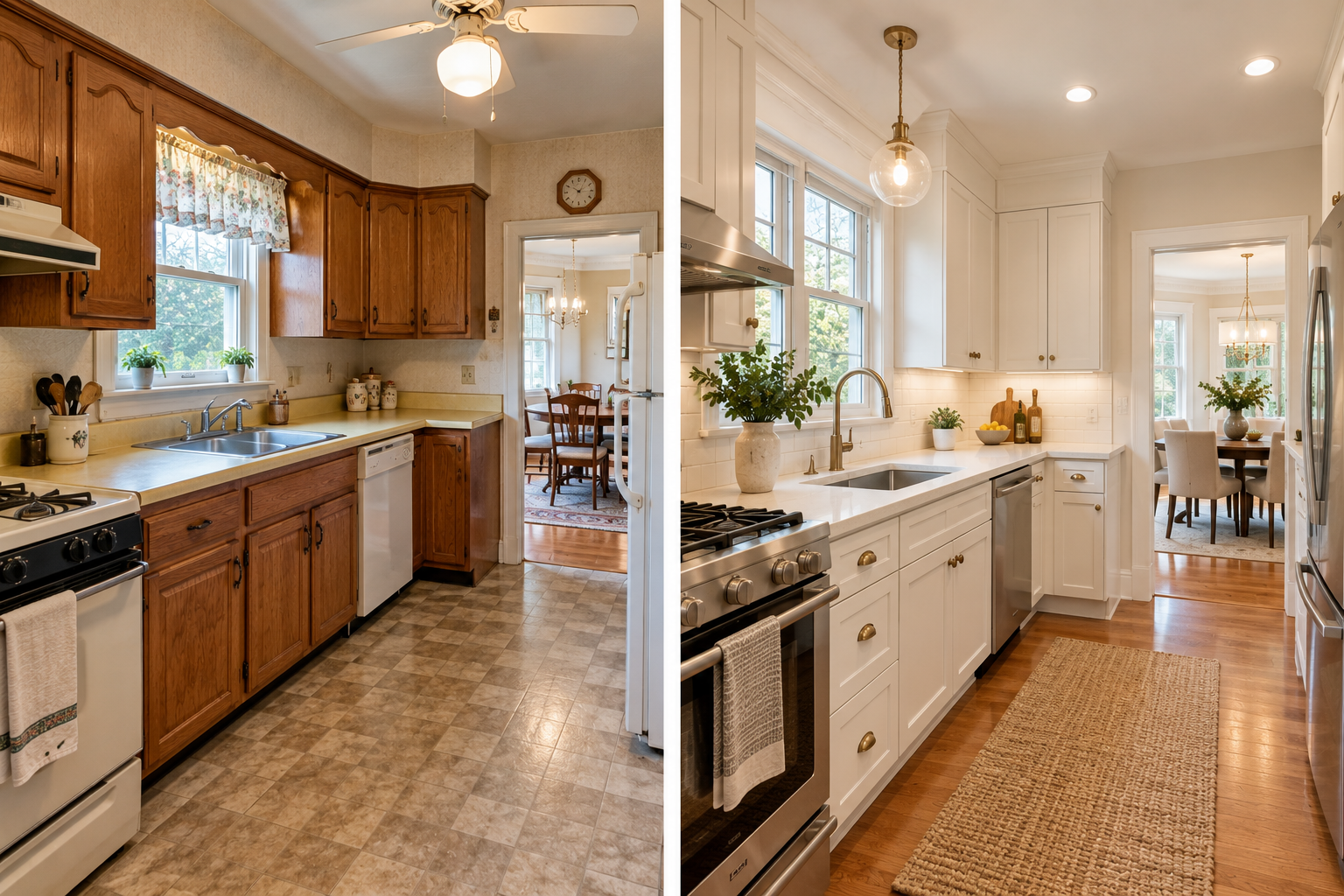
6. Can Professional Staging Help an Older or Unrenovated Home Sell?
Yes. Thoughtful staging can help buyers understand a home's layout, appreciate its features, and picture how they might use the space.
Staging doesn't necessarily require replacing furniture or purchasing expensive decorations.
Often, it's about removing clutter, arranging furniture appropriately, and improving lighting.
According to the National Association of Realtors' 2025 Profile of Home Staging, 83% of buyers' agents said staging made it easier for buyers to visualize a property as their future home.
The report also found that 29% of agents reported a 1% to 10% increase in the dollar value offered for staged homes.
Those results are based on agent observations and don't guarantee the same outcome for every listing.
For an older New Jersey property, staging can help highlight original hardwood flooring, decorative trim, spacious rooms, and natural light.
Imagine walking into a well-maintained Victorian home in Plainfield.
The kitchen may not have the newest finishes, but the original staircase, beautiful windows, and inviting living spaces can still make a memorable impression.
My advice: Present your home's strengths clearly. Professional photography, thoughtful furniture placement, and organized rooms can help buyers appreciate the property without hiding its actual condition.
7. Should You Renovate Your New Jersey Home Before Listing or Sell It As-Is?
The best decision depends on the cost of improvements, your timeline, the property's condition, and the likely difference in sale price.
There isn't one strategy that works for every homeowner.
For some properties, investing in repairs and updates can improve buyer interest and support a stronger asking price.
For others, selling in existing condition may make more financial sense.
Before deciding, consider this simple example.
A homeowner receives an estimated as-is market value of $525,000.
After evaluating possible improvements, the estimated market value with updates is $575,000.
If the proposed work costs $40,000, the apparent difference after renovation expenses is only $10,000, before carrying costs, financing, taxes, additional selling costs, and unexpected repairs.
The improved property might attract different buyers or sell on a different timeline, but the additional work doesn't automatically guarantee a better net result.
That's why preparation decisions should begin with a realistic comparison of both options.
I recommend evaluating the home's current condition, likely renovation costs, potential market value after improvements, and the time needed to complete the work.
My advice: Don't make renovation decisions based only on how much more an updated home might sell for. Consider what you'll actually keep after the expenses.

8. How Can Sellers Make Their Homes More Appealing Without Major Renovations?
You don't need to completely remodel your home to make a strong impression. A thoughtful preparation plan can help buyers focus on its best features.
Here are five steps I recommend for New Jersey homeowners preparing to sell:
1. Address obvious maintenance concerns.
Repair visible damage, leaking fixtures, and other manageable maintenance issues.
2. Refresh the presentation.
Use clean, neutral paint where needed, improve lighting, and organize rooms.
3. Focus on kitchens and bathrooms.
Make these spaces clean, functional, and well-maintained before deciding whether larger updates are necessary.
4. Improve exterior appearance.
Maintain landscaping, clean the entrance, and address worn exterior surfaces.
5. Price according to the property's actual condition.
Compare your home with relevant recent sales and current listings, including differences in repairs and improvements.
These steps help communicate the value of a well-maintained property without creating unnecessary renovation expenses.
For homeowners in Westfield, Cranford, Plainfield, Morristown, Bridgewater, Edison, and surrounding New Jersey communities, a property-specific plan can help make preparation more manageable.
9. Are Fixer-Uppers Still Worth Selling in New Jersey?
Absolutely. Homes that need updating can still attract buyers when their pricing reflects their condition and the work involved.
Some buyers are interested in properties they can renovate or personalize.
Others may be seeking a particular location, architectural style, lot size, or floor plan.
For example, an older Colonial with original woodwork and a spacious backyard may appeal to a buyer who values those features and is prepared to make improvements.
A fixer-upper doesn't need to compete directly with a fully renovated property on finishes.
Instead, its price should reflect the condition, location, features, and current market demand.
For sellers, accurate information and realistic expectations are important.
The goal is not to present a home as something it isn't.
It's to communicate its strengths honestly while helping buyers understand the improvements they may need to make.
My advice: Whether your home is fully updated or needs work, the right pricing and marketing plan can help position it appropriately for today's buyers.
Thinking About Selling Your New Jersey Home? Let's Find the Right Approach.
The difference between a move-in-ready home and a fixer-upper isn't simply about how modern a property looks.
It's about condition, buyer expectations, pricing, and the costs associated with future improvements.
For some homeowners, making a few thoughtful updates before listing can help attract interest.
For others, selling in current condition may be the more practical financial decision.
The important thing is making that choice with clear information before spending money on renovations you may not need.
As a lifelong New Jersey resident and real estate professional with Realty ONE Group, I understand that preparing your home for sale can feel overwhelming.
My priority is to listen to your concerns, explain your options, and help you focus on the steps that make sense for your property and your goals.
Whether your home has been beautifully updated or still has its original charm, I'm here to help you understand its market value and create a thoughtful selling plan.
Wondering Whether You Should Renovate Before Selling?
Let's review your home's current value, discuss which improvements are worth considering, and compare your selling options before you make a major investment.
Together, we can create a practical plan designed to help you pursue a strong selling price while keeping the process organized and manageable.
Contact Christine Cederquist | Realty ONE Group
Christine Cederquist
Realty ONE Group
Phone: +1 908-380-3555
Email: CederquistRealty@gmail.com
Serving homeowners throughout Union, Morris, Middlesex, Somerset, and Essex Counties, New Jersey.
Bringing Your Dream Home
Statistics reflect their respective reporting periods through October 2026. National research findings do not establish the exact price difference between updated and unrenovated homes in a particular New Jersey town. Renovation costs and resale outcomes vary.
FAQs
Do move-in-ready homes sell for more than fixer-uppers?
They often can. National research from Zillow found that remodeled homes sold for approximately 3.7% more than expected, while fixer-uppers sold at a 7.3% discount relative to comparable homes. Actual New Jersey pricing differences depend on property condition, location, and comparable sales.
Is it worth renovating a kitchen before selling in New Jersey?
Sometimes, but not always. Minor updates may improve presentation without requiring a complete renovation. The best decision depends on the cost of the work and the likely effect on market value.
Can I sell my New Jersey house without making repairs?
Yes. A property can generally be marketed in its current condition, subject to applicable disclosure and legal requirements. Pricing should reflect known issues, and buyers may still request inspections or negotiate repairs.
How can I determine whether renovating will increase my home's value?
Start with a comparative market analysis, realistic improvement estimates, and a review of recent sales involving both updated and unrenovated homes in your area.