From Tudors to Colonials: Historic Homes in Plainfield, NJ

From Tudors to Colonials: The Architectural Homes You Can Find in Plainfield, NJ
Drive through Plainfield, New Jersey, and you may notice something that sets its housing stock apart: the city contains an impressive range of architectural periods and styles.
You can find substantial Colonial Revival residences, Tudor-influenced buildings, Queen Anne details, Shingle Style homes, and houses that have changed architecturally over generations.
That variety is backed by Plainfield's documented history. The city's Hillside Avenue Historic District, for example, is recognized by the National Register of Historic Places for architecture that includes Colonial Revival, Queen Anne, and Shingle Style buildings. The Van Wyck Brooks Historic District is recognized for Late Victorian and later revival architecture.
For buyers who appreciate older homes and homeowners preparing to sell one, knowing the architectural story behind a property can make its details much easier to understand.

Why Does Plainfield Have So Many Historic Homes?
Plainfield's architecture reflects the city's growth from a rural community into an important residential suburb.
Historical documentation from the National Register describes how Plainfield attracted affluent New Yorkers during the late 19th century, when substantial homes and villas began appearing along its broad streets. Large residences continued to be constructed into the early decades of the 20th century, including Tudor-style mansions.
That history left Plainfield with housing from several architectural periods rather than one dominant style.
Today, that can make simply driving through sections of the city feel like an architecture lesson.
What Does Tudor Architecture Look Like in Plainfield?
Tudor Revival architecture became popular in the United States during the late 19th and early 20th centuries, and Plainfield has documented examples of the style.
One prominent example is the Plainfield Y.W.C.A., constructed in 1924 and designed by New York architect Arthur Ware. The New Jersey Historic Trust identifies it as an English Tudor-style building.
National Register documentation identifies its architectural classification more specifically as Tudor Revival, with materials including brick walls, a stone foundation, and a slate roof.
When looking at Tudor Revival residences, buyers may encounter characteristics such as steep rooflines, masonry, prominent chimneys, decorative timbering, asymmetrical façades, and windows arranged in groups. Individual homes will vary, and not every property described informally as "Tudor" contains all of these features.

What Is Colonial Revival Architecture?
Colonial Revival is another documented part of Plainfield's architectural history.
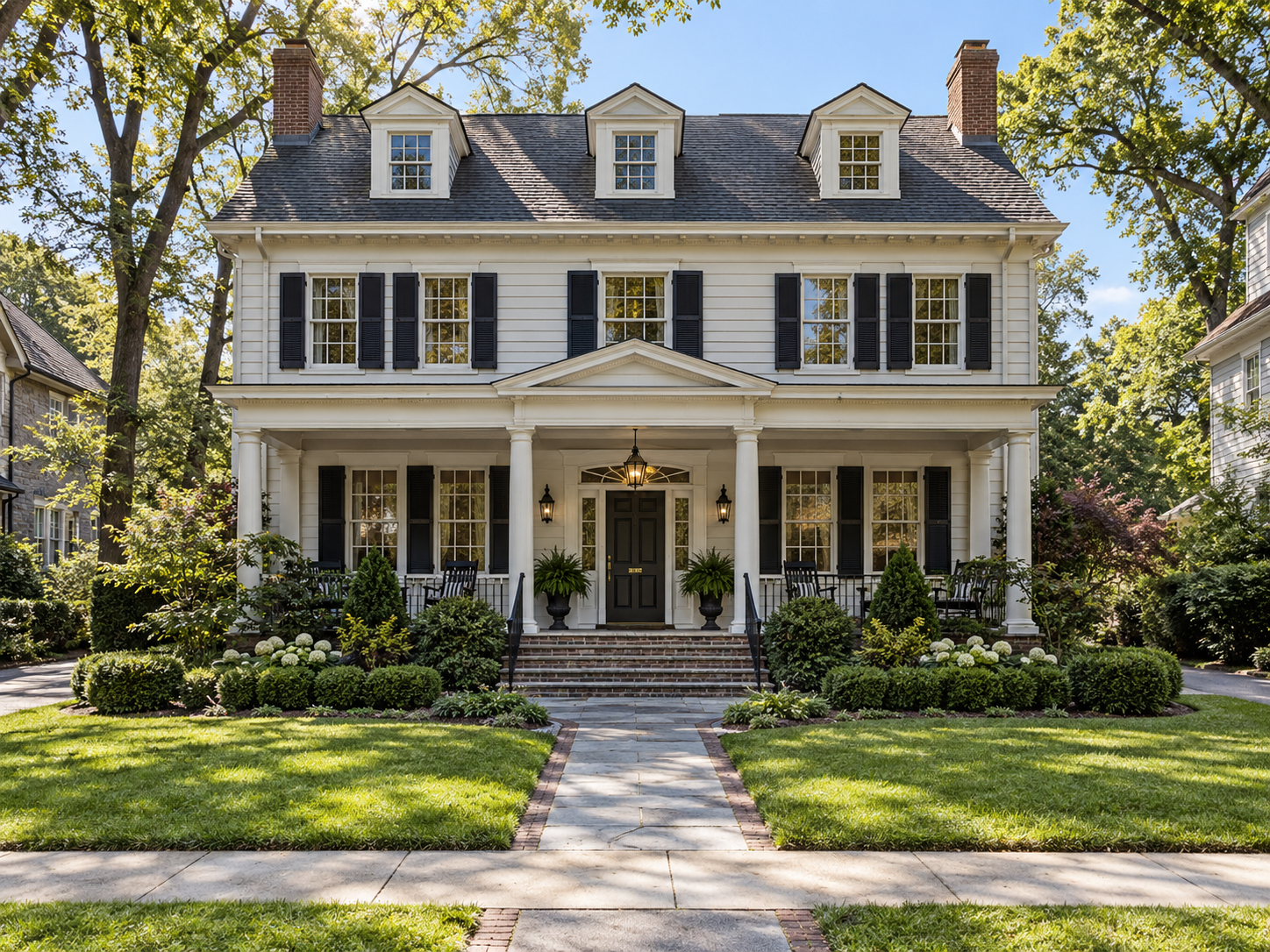
The style became widely popular beginning in the late 19th century. According to the National Park Service, architects drew inspiration from earlier Georgian and Federal architecture, often using elements such as prominent entrances, columns or pilasters, Palladian windows, sidelights, and symmetrical façades.
Plainfield has an excellent documented example in the George A. Strong Residence, constructed in 1896.
Designed by Rossiter and Wright, the home features buff yellow brick, a symmetrical front façade, a central porch, plain and stained-glass windows, and a side porte cochere. The New Jersey Historic Trust identifies it specifically as Colonial Revival architecture.
Plainfield's Hillside Avenue Historic District also includes Colonial Revival architecture.
What About Queen Anne Homes?
Queen Anne architecture is another style represented in Plainfield's historic housing stock.
The Hillside Avenue Historic District's National Register record specifically identifies Queen Anne alongside Colonial Revival and Shingle Style architecture.
Queen Anne houses are often associated with asymmetrical forms and decorative details. Depending on the property, you might see towers or turrets, varied rooflines, porches, decorative woodwork, bay windows, and different exterior materials.
One reason older Plainfield properties can be particularly interesting is that some have architectural features from more than one period.
The Nathaniel Drake House is a strong example.

One Plainfield House Tells Several Architectural Stories
The Nathaniel Drake House shows how a building can change across generations.
According to the New Jersey Historic Trust, the house was originally constructed in 1746 as a Georgian-style farmhouse.
After the property was sold in 1864, later renovations introduced Gothic Revival and Queen Anne elements. Changes included a three-story rear tower, turret, mansard roof, decorative dormers, and a second-story ballroom.
The building therefore provides a physical record of how architectural preferences changed over time.
For buyers of older properties, that's also a useful reminder: a home's current appearance may represent several periods of construction and alteration rather than one architectural style.

What Is Shingle Style Architecture?
Shingle Style is another architectural category officially associated with Plainfield's Hillside Avenue Historic District.
The National Register identifies Shingle Style, Queen Anne, and Colonial Revival among the district's significant architecture, with its primary periods of significance spanning the late 19th and early 20th centuries.
Shingle Style homes typically place less emphasis on elaborate surface decoration than some Victorian designs. Their exterior forms can include broad rooflines, continuous shingle surfaces, porches, towers, and irregular shapes.
For someone interested in architecture, Hillside Avenue is especially noteworthy because several styles can be studied within the same historic area.
Plainfield's Architecture Goes Beyond Residential Homes
The city's architectural story is visible in its public and civic buildings, too.
Plainfield City Hall is an example of early 20th-century Georgian Revival civic architecture and reflects the city's development from a rural community into a prosperous suburb.
The Plainfield Y.M.C.A., built in 1922, is a Neoclassical Revival building associated with the City Beautiful movement. Its exterior incorporates several brick patterns and monumental design elements.
Together, these buildings help provide context for the residential architecture around them.
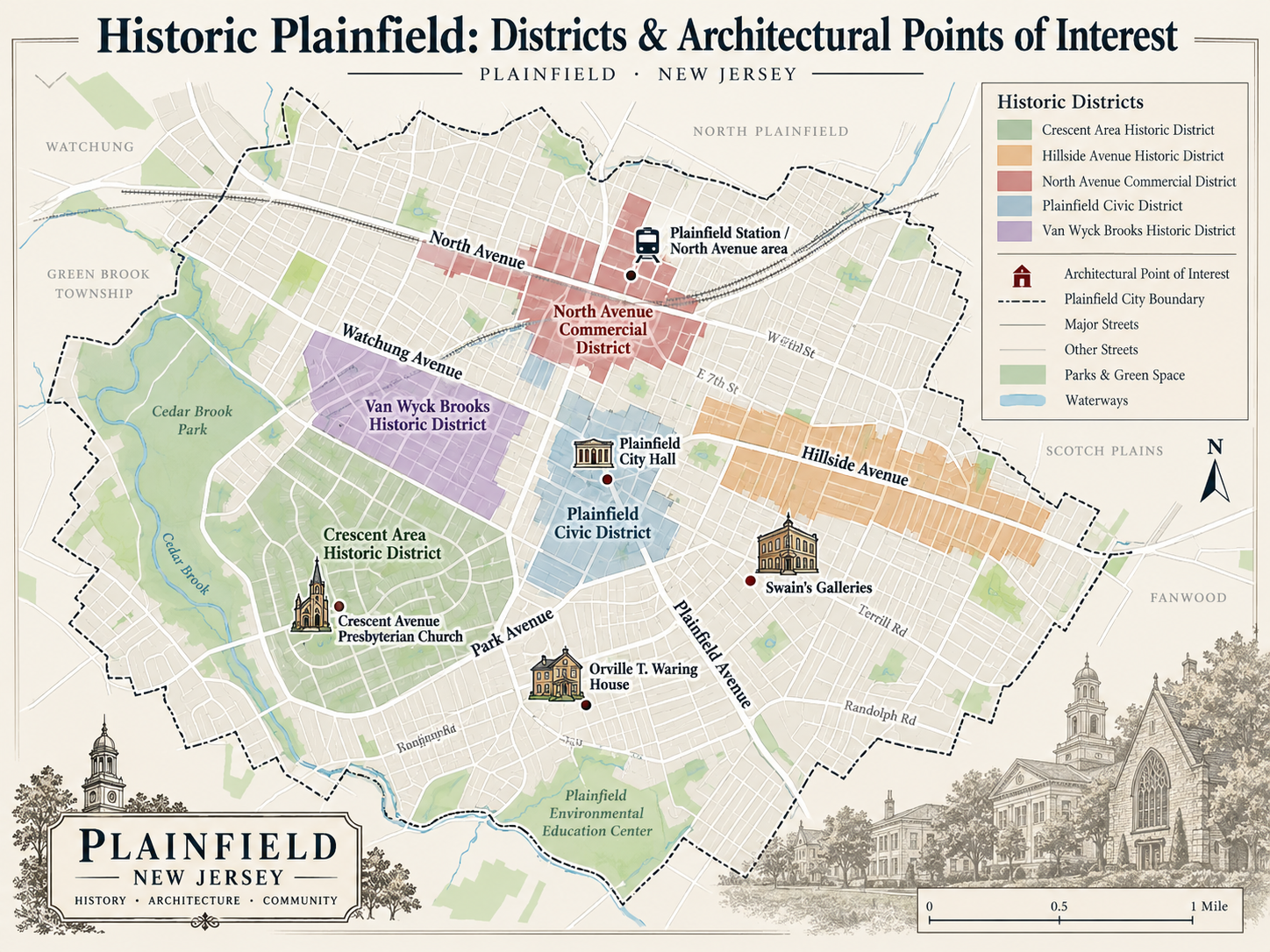
Plainfield Has Several Recognized Historic Areas
Plainfield's architectural significance isn't limited to a handful of individual properties.
New Jersey's Historic Preservation Office records multiple historic properties and districts in the city, including:
Hillside Avenue Historic District
Van Wyck Brooks Historic District
North Avenue Commercial Historic District
Plainfield Civic Historic District
Netherwood Railroad Station
Plainfield City Hall
The New Jersey Historic Preservation Office maintains information about properties and districts that have received state or federal historic recognition.
The Van Wyck Brooks Historic District was added to the National Register of Historic Places in 1985 and is recognized specifically for architectural significance. Its documented styles include Late Victorian and late 19th- and 20th-century revival architecture.
What Should Buyers Know About Purchasing an Older Plainfield Home?
Historic character can be appealing, but architectural details should be considered alongside the practical aspects of ownership.
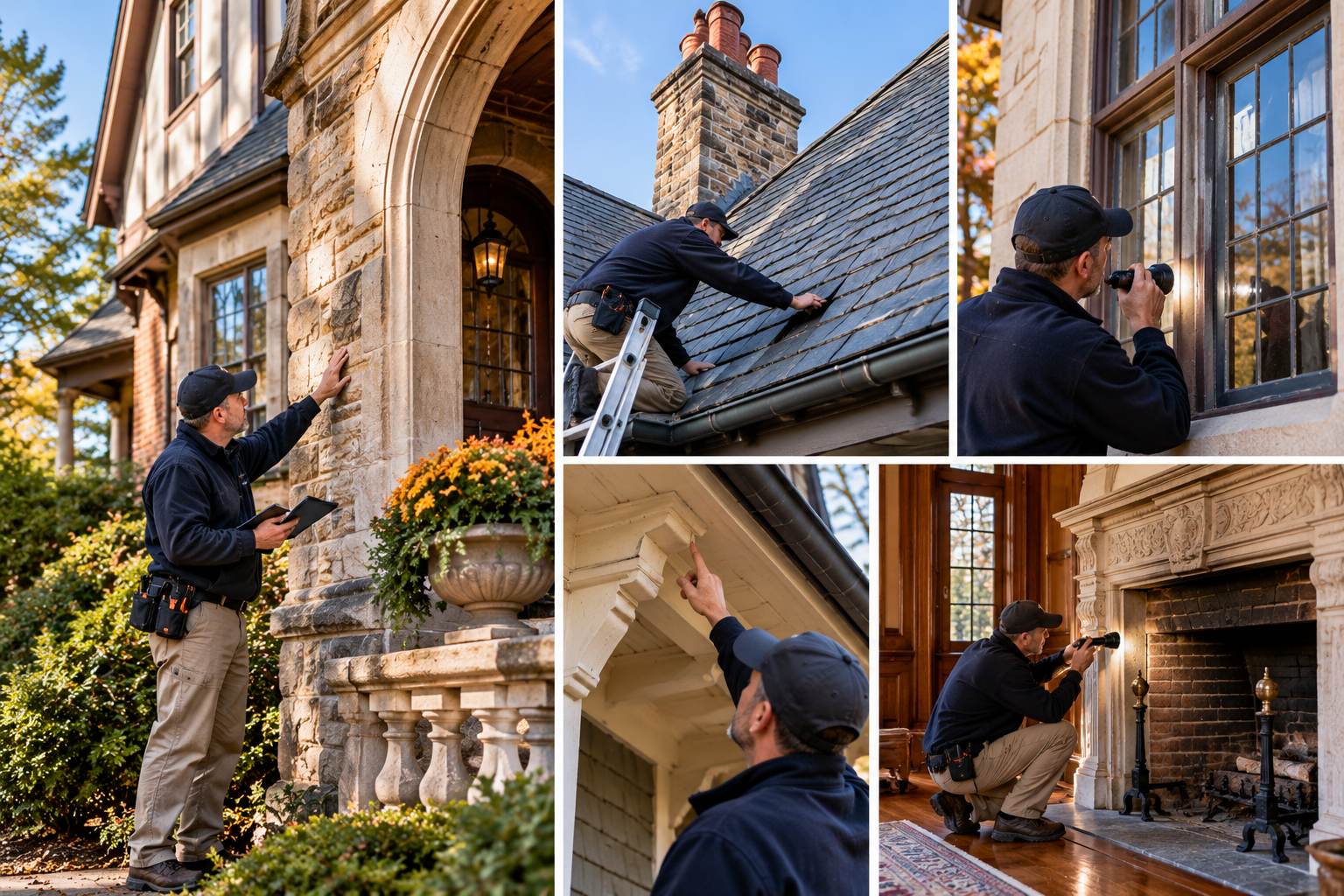
If you're considering an older property, look carefully at:
1. Roof and masonry condition: Slate, brick, stone, chimneys, and other period materials may require specialized maintenance.
2. Windows and doors: Original components may have different maintenance needs than newer replacements.
3. Electrical and plumbing systems: Find out what has been updated and when.
4. Heating and cooling: Large older homes can have very different systems and operating costs.
5. Foundation and drainage: A thorough inspection is particularly helpful with an older property.
6. Historic status: Verify whether a property is individually designated or located within a historic district and what requirements may apply to proposed changes.
7. Past renovations: Find out which parts of the property are original and which were changed later.
A qualified home inspector and, where appropriate, specialists familiar with older buildings can help buyers understand what they're purchasing.
Selling an Architecturally Distinctive Plainfield Home?
If you own an older Plainfield property, understanding its architecture can also help when preparing it for sale.
Buyers interested in historic homes may pay close attention to original woodwork, fireplaces, staircases, stained glass, built-ins, masonry, porches, and other period details.
Good marketing should explain those features accurately rather than simply calling every older property "historic."
Presentation matters, too.
Professional photography can show craftsmanship and room proportions clearly, while accurate information about renovations, mechanical updates, and maintenance can help buyers understand both the home's character and its condition.

Why Plainfield's Architecture Is Worth a Closer Look
Plainfield offers an architectural record that stretches across centuries.
The 1746 Nathaniel Drake House reflects Georgian origins and later Gothic Revival and Queen Anne changes. The Hillside Avenue Historic District includes Colonial Revival, Queen Anne, and Shingle Style architecture. Tudor Revival is represented in documented buildings from the early 20th century, while the Van Wyck Brooks Historic District preserves additional Victorian and revival-era architecture.
For people who appreciate craftsmanship and period architecture, that variety makes Plainfield an interesting part of Union County's housing market.
And for homeowners, understanding exactly what you own can be valuable when it's time to present the property to buyers.
Thinking About Buying or Selling a Distinctive Home in Plainfield?
Architecture can tell you a great deal about a property, but it's only one part of a real estate decision.
If you're considering buying an older Plainfield home, I can help you look at current availability, recent comparable sales, property information, and how a home fits your priorities.
If you're preparing to sell, we can identify the architectural details and updates that deserve attention, review the competition, and create a plan that presents your property clearly to today's buyers.
As a lifelong New Jersey resident and real estate professional serving Union, Morris, Middlesex, Somerset, and Essex Counties, I believe good real estate guidance starts with understanding both the property and its local market.
Curious about Plainfield's historic homes, or wondering how your property's architecture could factor into its sale? Let's connect and talk about your real estate goals.
Christine Cederquist
Realty ONE Group
Phone: +1 908-380-3555
Email: CederquistRealty@gmail.com
FAQs
What architectural styles can you find in Plainfield, NJ?
Documented Plainfield architecture includes Colonial Revival, Queen Anne, Shingle Style, Tudor Revival, Georgian and Georgian Revival, Gothic Revival, Late Victorian, Neoclassical Revival, and other revival styles.
Does Plainfield have Tudor architecture?
Yes. The New Jersey Historic Trust identifies the 1924 Plainfield Y.W.C.A. as an English Tudor-style building, while its National Register documentation classifies it as Tudor Revival. Historical documentation also notes Tudor-style mansions being constructed in Plainfield into the 1920s and 1930s.
Are there Colonial Revival homes in Plainfield?
Yes. Colonial Revival is specifically documented within the Hillside Avenue Historic District. The 1896 George A. Strong Residence is another documented Plainfield example.
What should I check before renovating a home in a historic district?
Confirm the property's designation and applicable local requirements before planning exterior or structural changes. Requirements can vary, so homeowners should check directly with the appropriate municipal and historic preservation authorities.