Fall vs. Winter Real Estate in New Jersey: Best Time to Sell

Fall vs. Winter Real Estate in New Jersey: When Is the Better Time to List Your Home?
If you are thinking about selling your New Jersey home before the end of the year, you may be asking an important question: Should I list in the fall, or wait until winter?
For many New Jersey homeowners, fall offers a strong window because buyer activity is still present while the market begins moving away from the busier spring and summer months. Winter usually brings fewer buyers, but it can also bring fewer competing listings and buyers who have a clear reason to make a move.
The better choice depends on your home, your local market, your timing, and how prepared you are to sell.

Is Fall a Good Time to Sell a Home in New Jersey?
Yes, fall can be a very practical time to put a New Jersey home on the market.
National Association of REALTORS® research shows that housing activity typically starts slowing during October and November compared with the peak spring and summer season. Even with fewer buyers, the people who remain active later in the year may have stronger reasons for purchasing.
New Jersey also does not always follow the national story. In September 2026, New Jersey Realtors® reported that limited inventory continued to support seller conditions in the state, with buyer interest and competition still present.
That matters for homeowners in Union, Morris, Middlesex, Somerset, Essex, and surrounding New Jersey counties. Instead of deciding based only on the season, sellers should look closely at current inventory, recent comparable sales, pricing patterns, and buyer activity in their specific town.
Why Sellers May Prefer a Fall Listing
Fall provides several practical advantages:
Buyers who postponed a move during summer may still be actively searching.
Your home can benefit from natural seasonal curb appeal.
Comfortable temperatures can make showings and moving easier than during colder winter weather.
Listing before the holiday season gives you additional time to market the property before the typical January slowdown.
Sellers may face fewer competing listings than during the spring selling season.
Presentation still matters. Buyers compare homes carefully, particularly when higher borrowing costs affect monthly payments. A well-prepared home, thoughtful pricing, strong photography, and clear marketing can help your property get attention.

What Happens to Real Estate Activity During Winter?
Winter usually brings a noticeable reduction in housing activity.
The National Association of REALTORS® notes that December through February tend to see less activity because of colder weather and seasonal schedules. Historical national data also shows homes generally taking longer to sell during this part of the year.
That does not mean homeowners should automatically avoid listing during winter.
One of winter's biggest advantages is less listing competition.
NAR research shows that the number of available homes typically falls heading into December. That means a well-priced and well-presented property may have fewer similar listings competing for buyer attention.
Are Winter Buyers More Serious?
There may be fewer people touring homes in winter, but many winter buyers are working with a specific timeline.
NAR notes that winter buyers may be motivated by employment changes, relocation, or another time-sensitive reason for purchasing.
For a seller, that can be valuable. The goal is not simply to attract the greatest number of people through the door. You want to reach buyers who see the value in your property and are prepared to take the next step.
Winter listings still require realistic expectations. Showings can be affected by weather, daylight hours are shorter, and homes may spend more time on the market than they would during peak season.

Fall vs. Winter: Which Season Gives Sellers the Advantage?
For many New Jersey homeowners who are already prepared to sell, **fall may offer the better balance of buyer activity, weather, presentation opportunities, and timing.**
Winter can still work well when the property is priced correctly and there is limited competing inventory.
Here is a simple way to compare the two:
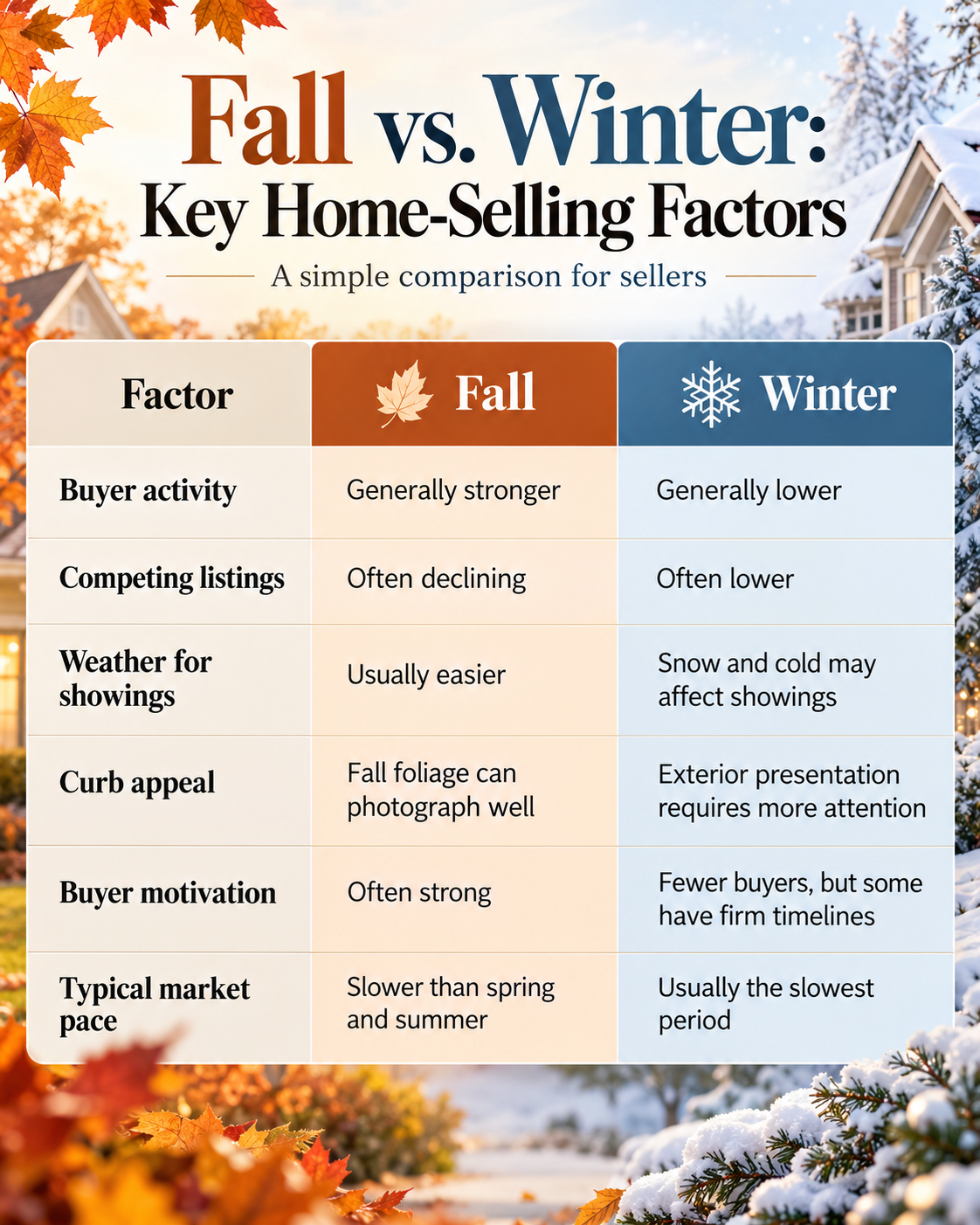
National seasonality research from NAR found a median market time of about 41 days during October and November compared with about 49 days during December through February. These are national historical patterns rather than a prediction for an individual New Jersey property.
Your town may perform differently, which is why local information matters.
What About Mortgage Rates?
Mortgage rates can affect how much buyers are able or willing to spend, so sellers should consider financing conditions alongside seasonality.
For example, Freddie Mac reported an average 30-year fixed mortgage rate of 7.40% on October 8, 2026. Rates change regularly, so homeowners should view them as one part of the overall selling picture rather than the sole reason to list or wait.
A higher-rate market can make strategic pricing and presentation especially important. Buyers may pay closer attention to value, condition, monthly costs, and how a home compares with other available properties.

Should You Wait Until Spring Instead?
Not automatically.
Spring traditionally brings more activity, but it also brings more sellers to the market. Waiting can mean competing with a larger number of listings.
If your home is ready now and selling fits your personal plans, waiting solely because spring is traditionally considered a busier season may not be necessary. New Jersey Realtors® reported in September 2026 that supply remained limited and buyer competition continued to support sellers in the state.
The better question is:
What does the market look like for homes like yours, in your town, right now?
A local market review can show you recent sales, current competition, pricing patterns, average market time, and how your home's condition compares with nearby listings.
How to Prepare Your New Jersey Home for a Fall or Winter Sale
No matter which season you choose, preparation can have a meaningful effect on the way buyers respond to your home.
Focus on:
Addressing noticeable repairs before photography and showings
Removing unnecessary clutter
Keeping rooms bright and easy to view
Making the entrance clean and inviting
Maintaining leaves, snow, and walkways
Using professional photography
Setting a price based on current comparable sales
Creating a showing plan that makes the property easy for buyers to see
The goal is to help buyers quickly understand the home's condition, layout, and value.
So, Is Fall or Winter Better for Selling Your New Jersey Home?
For a seller who is ready now, fall will often provide more buyer activity and easier showing conditions, while winter may provide less competition from other sellers and access to buyers working with firmer timelines.
There is no universal month that guarantees the strongest result.
Your best listing date should be based on your home's condition, recent sales in your area, competing inventory, pricing, your plans after the sale, and how quickly you would like to move.
That is where having a clear selling plan makes a difference.
Thinking About Selling Your New Jersey Home?
You do not have to guess whether fall, winter, or another time of year makes the most sense for your property.
I can review your home's current position in the local market, look at nearby sales and active listings, and talk through the preparation and pricing decisions that may help you achieve a strong sale with less stress.
Curious what your home could sell for in today's New Jersey market? Let's talk about your selling goals and put together a clear plan that works for your timing.
Christine Cederquist
Realty ONE Group
Phone: +1 908-380-3555
Email: CederquistRealty@gmail.com
FAQs
Is winter a bad time to sell a house in New Jersey?
Not necessarily. Winter usually brings fewer buyers, but it can also mean fewer homes competing for attention. Some winter buyers are working with firm timelines, which can create solid opportunities for well-prepared sellers.
Is it better to sell in fall or wait until spring?
That depends on your goals, your home's condition, and the activity in your local market. Spring may bring more buyers, but it often brings more listings too. If your home is ready and market conditions are favorable, waiting may not always be the better choice.
Are winter home buyers usually more motivated?
Some are. Buyers shopping during colder months may have a specific reason for moving, such as a relocation, job change, lease deadline, or personal timeline. That can make winter showings especially meaningful for sellers.
How can I decide whether fall or winter is right for my home?
Start with a local market review. Looking at recent comparable sales, active competition, pricing trends, and your preferred timeline can give you a much clearer answer.