Common Home Selling Mistakes to Avoid in New Jersey

Common Home Selling Mistakes to Avoid in New Jersey
Selling a home in New Jersey involves much more than putting a property on the market and waiting for offers. Pricing, preparation, presentation, disclosure requirements, showing readiness, and closing expenses can all affect the outcome.
For homeowners in Union, Morris, Middlesex, Somerset, and Essex Counties, avoiding a few common mistakes can make the selling process more organized and help your property make a stronger impression on buyers.
Here are some of the mistakes worth addressing before your home reaches the market.
1. Setting the Listing Price Based on Emotion
Your home may hold years of memories, but buyers will compare it with other available and recently sold properties.
One common mistake is choosing a price based mainly on what you hope to receive rather than current market information. The National Association of REALTORS® notes that factors such as a home's size, location, amenities, and condition may be considered when determining a recommended listing price.
A thoughtful pricing plan considers recent comparable sales, current competition, the condition of your property, and your selling timeline.
Pricing too high can reduce early buyer interest. Pricing thoughtfully from the beginning can put your home in a stronger position when buyers first see it.

2. Waiting Until the Last Minute to Prepare the Home
Small details can influence how buyers respond to a property.
Cleaning, decluttering, addressing visible maintenance concerns, improving lighting, and making rooms feel organized can help buyers focus on the home itself rather than distractions.
The National Association of REALTORS® recommends cleaning and decluttering before photographs, showings, and open houses and notes that sellers may also consider staging to help buyers better picture how spaces can be used.
That does not mean every seller needs a major renovation.
A better approach is to decide which improvements are likely to matter to buyers and which ones may not provide enough benefit to justify the cost.
3. Spending Money on the Wrong Updates
Sellers sometimes assume they need to renovate extensively before listing.
That can lead to spending money on projects buyers may not value enough to justify the expense.
Instead, start with the home's current condition. Look at necessary repairs, paint, lighting, flooring condition, landscaping, cleanliness, and areas that may stand out during a showing.
Your real estate professional can help you separate projects that may support the sale from projects that could simply increase your preparation costs.
For many properties, thoughtful presentation can matter more than attempting to make every room look brand new.

4. Underestimating the Importance of Listing Photos
For many buyers, the first showing happens online.
Dark rooms, cluttered counters, distracting personal items, or poorly framed photographs can make it harder for buyers to appreciate a home's layout and features.
NAR advises sellers to prepare carefully for photography because cameras can make clutter and poor furniture placement more noticeable. Recommendations include cleaning thoroughly, reducing unnecessary furniture, opening blinds for natural light, and checking how rooms appear in photographs before the formal photo session.
Professional presentation gives buyers a clearer reason to stop scrolling and take a closer look.
5. Making Showings Harder Than They Need to Be
Preparing for repeated showings can feel inconvenient, especially when you are still living in the property.
Still, buyers need opportunities to see the home.
Keeping counters clear, surfaces clean, rooms organized, and the property ready for visitors can make showing days easier. NAR's current seller showing checklist recommends decluttering, making beds, clearing kitchen and bathroom counters, and keeping surfaces clean before buyer visits.
A simple showing routine can reduce last-minute stress. Before listing, create a short checklist so you know exactly what needs to be handled when a showing is scheduled.
6. Overlooking Known Property Issues or Disclosure Responsibilities
Trying to avoid a difficult conversation about a known property issue can create bigger problems later.
New Jersey's Seller's Property Condition Disclosure Statement states that sellers have an obligation to disclose known material defects even when a particular issue is not specifically addressed on the printed form. The disclosure covers areas such as roofing, structural conditions, plumbing, electrical systems, water intrusion, environmental concerns, and other property conditions.
Be accurate and transparent about what you know. Questions involving disclosure obligations should also be discussed with the appropriate real estate or legal professional for your specific situation.

7. Focusing Only on the Offer Price
The highest number on the page does not tell you everything about an offer.
Sellers should understand the full terms, which may include financing, deposit amounts, inspection provisions, appraisal considerations, requested closing date, and other conditions.
An offer that works well for your priorities may depend on more than price alone.
Before responding, review the terms carefully with your real estate professional and attorney so you understand what each offer means for your sale and timeline.
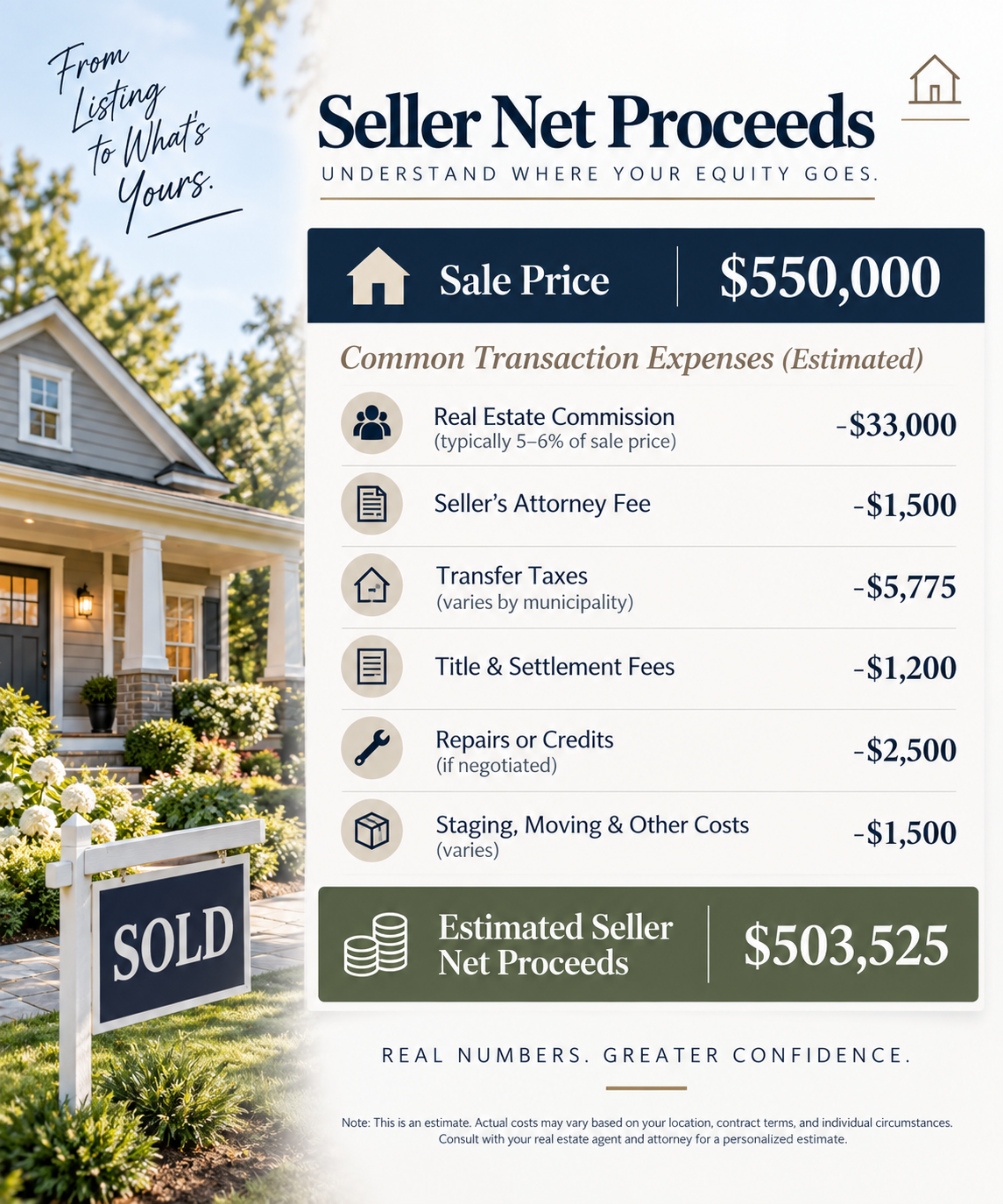
8. Forgetting to Budget for Seller Closing Expenses
A sale price is not the same as the amount a seller receives after the transaction closes.
New Jersey imposes a Realty Transfer Fee on sellers for most real property transfers unless an exemption applies. The fee is calculated according to the consideration stated in the deed and applicable state rules.
New Jersey also changed its rules for certain transfers above $1 million. Under legislation effective for qualifying transfers occurring on or after July 10, 2025, the seller is responsible for the state's Graduated Percent Fee on covered transfers above $1 million.
Depending on the transaction, sellers may also need to account for legal fees, agreed real estate compensation, mortgage payoff amounts, property tax adjustments, repairs or credits negotiated during the transaction, moving costs, and other expenses.
Ask for an estimated seller net sheet before listing so you have a clearer picture of the numbers.
9. Trying to Handle Every Decision at Once
Getting a home ready for sale can quickly create a long list of questions.
Should you repaint? Repair the deck? Replace flooring? Stage the home? List now or later? Which offer should you accept?
Trying to solve everything at once can make the process feel harder than it needs to be.
Start with a clear plan. Determine the selling timeline, review the property's condition, establish a pricing strategy, decide which preparation work makes sense, and then organize the marketing and showing plan.
Clear steps and regular communication can remove a great deal of unnecessary pressure.
A Better Way to Prepare for a New Jersey Home Sale
A strong sale starts before the listing appears online.
Focus on the areas you can control:
* Price the property using current local market information.
* Address the preparation items that matter most.
* Present the home clearly in photography and marketing.
* Keep the property ready for buyer visits.
* Provide accurate information about known property conditions.
* Understand offer terms before making a decision.
* Review expected selling expenses before closing.
You do not need to make every decision by yourself. The right preparation plan can help you feel informed and organized from the first conversation through closing.
Thinking About Selling Your New Jersey Home?
Selling a home can come with a lot of decisions, but a clear strategy can make those decisions much easier.
I help New Jersey homeowners understand what to address before listing, which preparation steps matter most, how current market activity may affect pricing, and what to expect throughout the sale. My goal is to keep communication clear, handle the details carefully, and help you work toward a strong result with less stress.
Thinking about selling in Union, Morris, Middlesex, Somerset, or Essex County? Let’s talk about your home, your timing, and the steps that make sense for you.
Contact Christine Cederquist to talk about what you're looking for and start reviewing New Jersey luxury homes that fit your goals.
Christine Cederquist
Realty ONE Group
Phone: +1 908-380-3555
Email: CederquistRealty@gmail.com
Ready to talk about what you are looking for? Reach out and let’s create a focused home-search plan.
This article is for general real estate education and is not legal, tax, or financial advice. Requirements and costs can vary by property and transaction. Consult the appropriate real estate, legal, tax, or financial professional regarding your circumstances.
FAQs
Should I renovate my home before selling?
Not necessarily. Some homes benefit from targeted repairs, fresh paint, decluttering, landscaping, or staging rather than major renovations. Review the property's condition and current buyer expectations before committing to expensive projects.
How do I know what price to list my New Jersey home for?
Your pricing strategy should consider recent comparable sales, competing listings, property condition, location, features, and current market activity. NAR identifies property size, location, amenities, and condition as factors agents may review when recommending a listing price.
Do New Jersey sellers have to disclose property problems?
New Jersey's seller disclosure form states that sellers have an obligation to disclose known material defects, including known issues that may not be specifically listed on the form. Sellers should obtain legal guidance if they are unsure about a particular disclosure obligation.
How early should I start preparing to sell?
Starting before you plan to list gives you more time to make thoughtful decisions about repairs, presentation, pricing, photography, paperwork, and moving logistics without feeling rushed.