Can New Housing Help New Jersey Business Districts?

Can New Housing Development Help Revitalize New Jersey Business Districts?
Yes, new housing can help strengthen New Jersey business districts when residential development is planned alongside shops, services, transportation, public spaces, and pedestrian connections.
More residents living close to a downtown can mean more potential customers for restaurants, coffee shops, retailers, personal services, and other local businesses. Housing can also bring activity to an area beyond traditional business hours and put vacant or underused property back into productive use.
New Jersey is actively pursuing this approach. The state's September 2026 housing strategy calls for more development near transit, redevelopment of vacant offices and aging commercial properties, and new housing that supports historic main streets and downtown areas.
But housing by itself is not a guarantee of economic success. Location, affordability, transportation, thoughtful land use, commercial space, pedestrian access, parking needs, and the strength of existing businesses all matter.
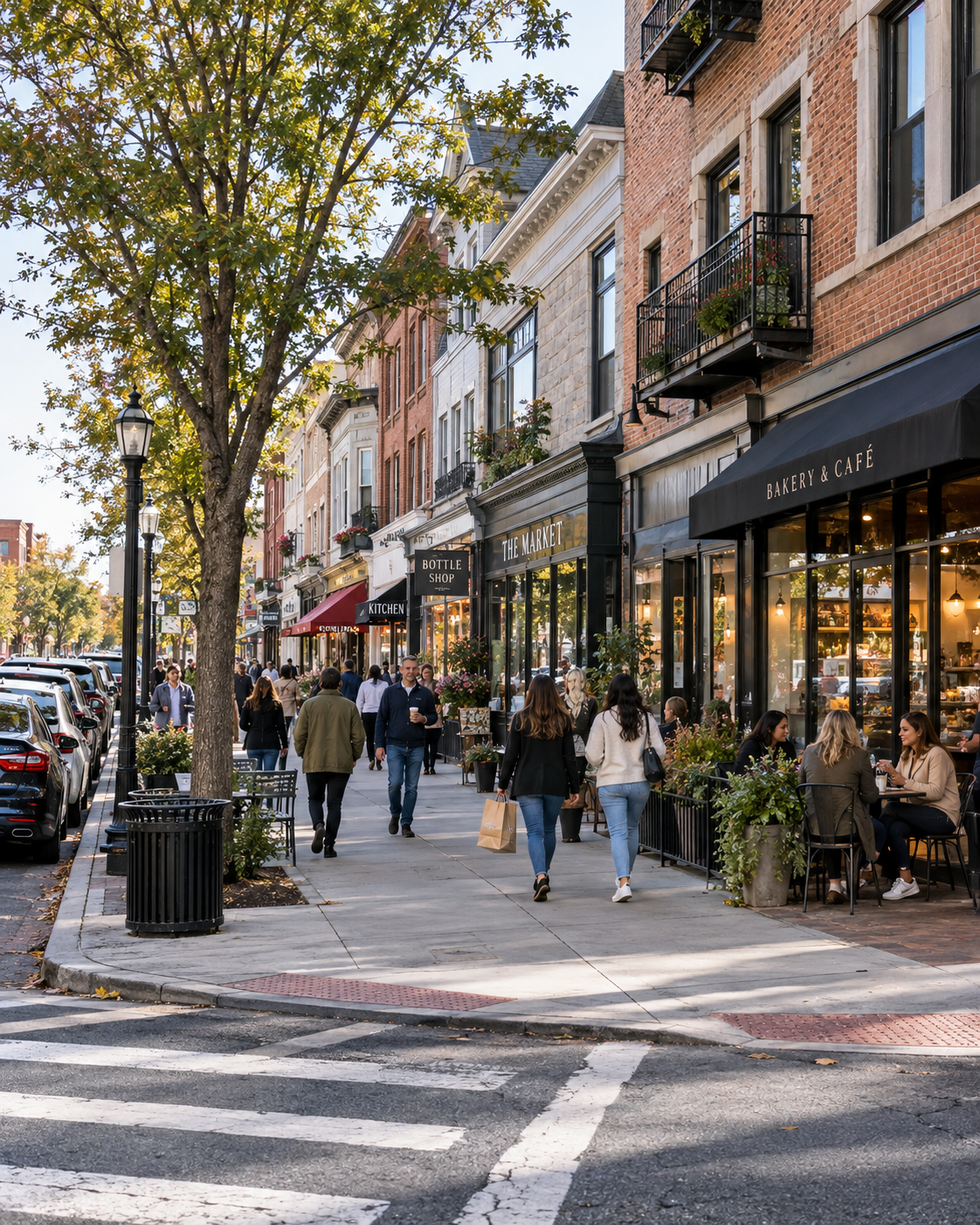
How Can New Housing Support a Business District?
Housing brings potential customers closer to businesses.
When people live near restaurants, grocery stores, coffee shops, salons, professional services, recreation, and other businesses, some of their daily spending can happen within the surrounding district.
Housing can also bring activity to an area at different times of day.
An office-centered district might be busiest during weekdays. Adding residential properties can introduce activity during evenings and weekends as well.
New Jersey's State Plan specifically identifies housing in appropriate commercial areas as one method of creating activity beyond normal business hours. It also supports mixed-use development, pedestrian connections, public spaces, and redevelopment of underused areas.

1. More Residents Can Mean More Potential Customers
One of the most straightforward connections between housing and business activity is proximity.
Someone living several blocks from a downtown restaurant, grocery store, fitness studio, or coffee shop has the opportunity to use those businesses as part of an everyday routine.
That does not mean every new resident will spend locally, and it does not guarantee that every business will succeed.
Still, putting more households close to commercial areas increases the potential customer base surrounding those businesses.
This is one reason mixed-use development has become a significant part of New Jersey's approach to redevelopment.
A recent example is NJ TRANSIT's Red Bank project. In June 2026, the agency approved an agreement to redevelop six acres next to Red Bank Station into a project containing rental housing, retail space, and parking.

2. Housing Can Put Underused Property Back to Work
Some New Jersey redevelopment opportunities involve land that is already developed but is not being used to its full potential.
Examples might include:
Surface parking lots
Vacant commercial buildings
Aging shopping areas
Former office properties
Underused land near transit
Empty upper floors above commercial spaces
Redeveloping these properties with housing and other uses can introduce more activity without requiring development on previously untouched land.
New Jersey's 2026 housing strategy specifically calls for redevelopment of underused state property, vacant office buildings, and aging strip malls while also supporting downtown housing.
That approach can be particularly relevant in established New Jersey communities where the basic infrastructure, streets, businesses, and transportation connections already exist.
3. Transit-Oriented Housing Can Connect Homes and Commerce
New Jersey's transportation network creates another opportunity for housing and business districts to support one another.
Transit-oriented development places housing, commercial uses, and other amenities near rail, bus, or light-rail service.
NJEDA says its current Transit-Oriented Development initiative is intended to expand mixed-use, walkable neighborhoods around existing stations while increasing use of New Jersey's transit system.
In July 2026, New Jersey announced new transit-oriented development efforts in Bayonne and Linden.
The Bayonne proposal involves a 4.3-acre property next to the 34th Street Hudson-Bergen Light Rail station. The state's plans call for housing, commercial or retail space, public areas, pedestrian connections, commuter parking, bicycle infrastructure, and transit improvements.
In Linden, the state is seeking development of transit-oriented housing near the NJ TRANSIT station and existing mixed-use projects. State officials said the project is intended to support downtown activity, expand housing, strengthen the tax base, and attract private investment.

4. Mixed-Use Development Can Keep Downtown Areas Active Longer
A business district made up mostly of offices may experience heavy activity during the workday and less activity later.
A residential district may have residents nearby but relatively few places to shop or dine.
Mixed-use development puts multiple activities closer together.
Housing can sit near:
Restaurants
Retail shops
Professional offices
Transportation
Parks
Public spaces
Personal services
Entertainment and recreation
New Jersey's planning guidance supports adding housing to appropriate commercial areas partly because residents can contribute to activity outside normal business hours.
For existing businesses, that could mean access to customers who are already nearby instead of relying entirely on visitors driving into the district.
5. Main Street Programs and Housing Can Support the Same Goal
Housing development is only one piece of downtown improvement.
New Jersey also operates Main Street New Jersey, a program designed to support the economic strength of downtown commercial districts.
In 2024, Plainfield, Princeton, Millburn, and Haddonfield were added to the program, bringing the statewide total at that time to 29 designated districts. The program provides participating downtowns with technical assistance and training focused on strengthening main streets as centers of commercial and community activity.
This matters because successful downtown development usually requires more than adding housing units.
Municipal planning, existing businesses, property owners, transportation, streetscape improvements, commercial recruitment, events, and public investment can all contribute.
Housing can provide additional people and activity. A broader downtown plan helps connect that activity with local businesses.
6. Plainfield Offers an Interesting New Jersey Example
For communities such as Plainfield, housing and downtown planning are particularly relevant.
Plainfield became a designated Main Street New Jersey district in 2024, giving the city access to additional technical support for strengthening its downtown commercial area.
That creates an opportunity to think about housing and business development together rather than treating them as unrelated issues.
Additional residential development near commercial areas may increase the number of people living near shops and services.
But the details matter.
Effective planning should consider:
Where new housing is located
Connections to existing businesses
Pedestrian access
Transportation
Parking
Streetscape design
Public spaces
Housing affordability
Existing property owners
Infrastructure capacity
For homeowners, buyers, and investors, changes like these are worth watching because development can affect how different parts of a municipality function over time.
7. New Housing Can Also Expand a Municipality's Property Base
Redevelopment can have another potential effect: turning underused property into economically productive property.
New Jersey officials cited this goal in connection with the 2026 Linden transit-oriented development proposal. NJEDA said redevelopment of the site could expand housing, strengthen the local property tax base, and attract private investment.
That can be valuable when a municipality has surface lots, vacant buildings, or other parcels capable of supporting additional development.
The financial result depends on the structure of a particular project, local tax arrangements, public incentives, infrastructure expenses, and other costs.
For that reason, residents and property owners should evaluate individual projects based on their actual details rather than assuming every development produces the same economic outcome.
8. New Housing Does Not Automatically Fix a Business District
This is an important part of the conversation.
Building apartments or homes near a commercial district does not automatically create a successful downtown.
A project can add residents without adequately connecting them to existing businesses.
For housing development to support a business district effectively, municipalities and developers may need to consider:
Street and sidewalk connections
Accessible public spaces
Ground-floor commercial opportunities
Transit access
Parking and traffic needs
Appropriate density
Infrastructure
Housing affordability
Commercial rents
Existing businesses
Long-term maintenance
New Jersey's current planning approach reflects many of these issues. For example, the state's Bayonne proposal calls for housing alongside retail or commercial space, pedestrian connections, public areas, bicycle infrastructure, parking, transit connections, accessibility, and streetscape improvements.
Housing works best as part of a thoughtful district plan.

Why Does This Matter to New Jersey Homeowners?
Downtown investment can matter even if you are not opening a business or purchasing a new condominium.
The surrounding community is part of how buyers evaluate real estate.
Buyers may consider objective factors such as:
Nearby shopping and dining
Transit options
Parks and recreation
Public spaces
Commuting access
Available housing
Property taxes
Current development projects
Municipal plans
A new development can change the supply of housing and commercial space in an area. It can also change what buyers see when comparing one property or municipality with another.
That does not mean every development increases surrounding home values.
Real estate values depend on many factors, including the individual property, broader market conditions, taxes, mortgage rates, supply, condition, location, and buyer demand.
For homeowners thinking about selling, the important question is how current and planned development fits into the story buyers are seeing in your particular market.
What Should Homeowners Watch for When New Development Is Proposed?
If a significant housing or mixed-use development is planned near your property, look beyond the number of housing units.
Review the project's publicly available information and ask:
Will there be commercial space?
Is it near transit?
Are pedestrian improvements planned?
What is happening with parking?
Does the project replace an underused property?
Are public spaces included?
What is the construction timeline?
How does it fit the municipality's redevelopment plan?
What other projects are planned nearby?
New Jersey's Department of Community Affairs provides municipalities with planning assistance related to master plans, redevelopment, housing, and downtown improvement. In September 2026, DCA specifically identified local planning as a tool for expanding housing access, supporting local businesses, and strengthening communities.
Can Housing Really Help New Jersey's Downtowns?
It can, especially when housing is part of a broader mixed-use plan.
New residents can expand the potential customer base surrounding shops and services. Redevelopment can give new purpose to vacant or underused land. Transit-oriented housing can connect residents with businesses and transportation. Mixed-use buildings can also add activity outside traditional working hours.
New Jersey's current policies in Red Bank, Bayonne, Linden, Plainfield, and other communities show that state and local leaders are actively connecting housing production with transportation and downtown development.
The stronger approach is not simply more housing.
It is housing planned with the businesses, transportation, infrastructure, public spaces, and existing character of the surrounding district in mind.
Thinking About How New Development Could Affect Your New Jersey Real Estate Plans?
Changes in a downtown or business district can create questions for homeowners.
Will new housing bring more activity to the area? How much additional inventory is coming? What other properties will buyers compare with yours? Could nearby redevelopment change the way your property should be marketed?
Those questions are best answered with local information rather than assumptions.
As a lifelong New Jersey resident and real estate professional serving Union, Morris, Middlesex, Somerset, and Essex Counties, I help homeowners look at current sales, competing listings, local development, property condition, and buyer activity before making a selling decision.
Thinking about selling and wondering what changes in your local market could mean for your home? Let's review your property and your goals together so you can make your next decision with clear information.
Christine Cederquist
Realty ONE Group
Phone: +1 908-380-3555
Email: CederquistRealty@gmail.com

FAQs
Can new apartments help local businesses?
They can increase the number of potential customers living close to shops and services. The actual economic effect depends on the development's location, pedestrian connections, commercial offerings, affordability, and the characteristics of the surrounding business district.
Why is New Jersey building more housing near transit?
The state's current Transit-Oriented Development initiative seeks to create mixed-use neighborhoods around existing transit stations while adding housing and supporting transit use. Projects are currently moving forward in places including Red Bank, Bayonne, and Linden.
Is New Jersey actively encouraging downtown housing?
Yes. New Jersey's 2026 housing strategy specifically supports housing near transit, redevelopment of vacant offices and aging commercial areas, and development connected with the state's historic main streets and downtowns.
Does new development always increase nearby property values?
No. Property values depend on many factors, and the effect of an individual development can vary. Homeowners should look at actual sales data, housing supply, taxes, property condition, local buyer demand, and the specific characteristics of the project.