Buying Versus Renting in New Jersey in 2026: Which Makes More Sense for You?

Buying Versus Renting in New Jersey in 2026: Which Makes More Sense for You?
Should you buy or rent in New Jersey in 2026? There is no single answer that works for everyone.
Home prices remain high in many parts of New Jersey, mortgage rates continue to affect monthly payments, and renting also carries a significant monthly cost. The better choice depends on your finances, how long you expect to stay in one place, how much flexibility you want, and whether you are ready for the responsibilities that come with owning a home.
Before deciding, it helps to compare more than a mortgage payment with monthly rent.
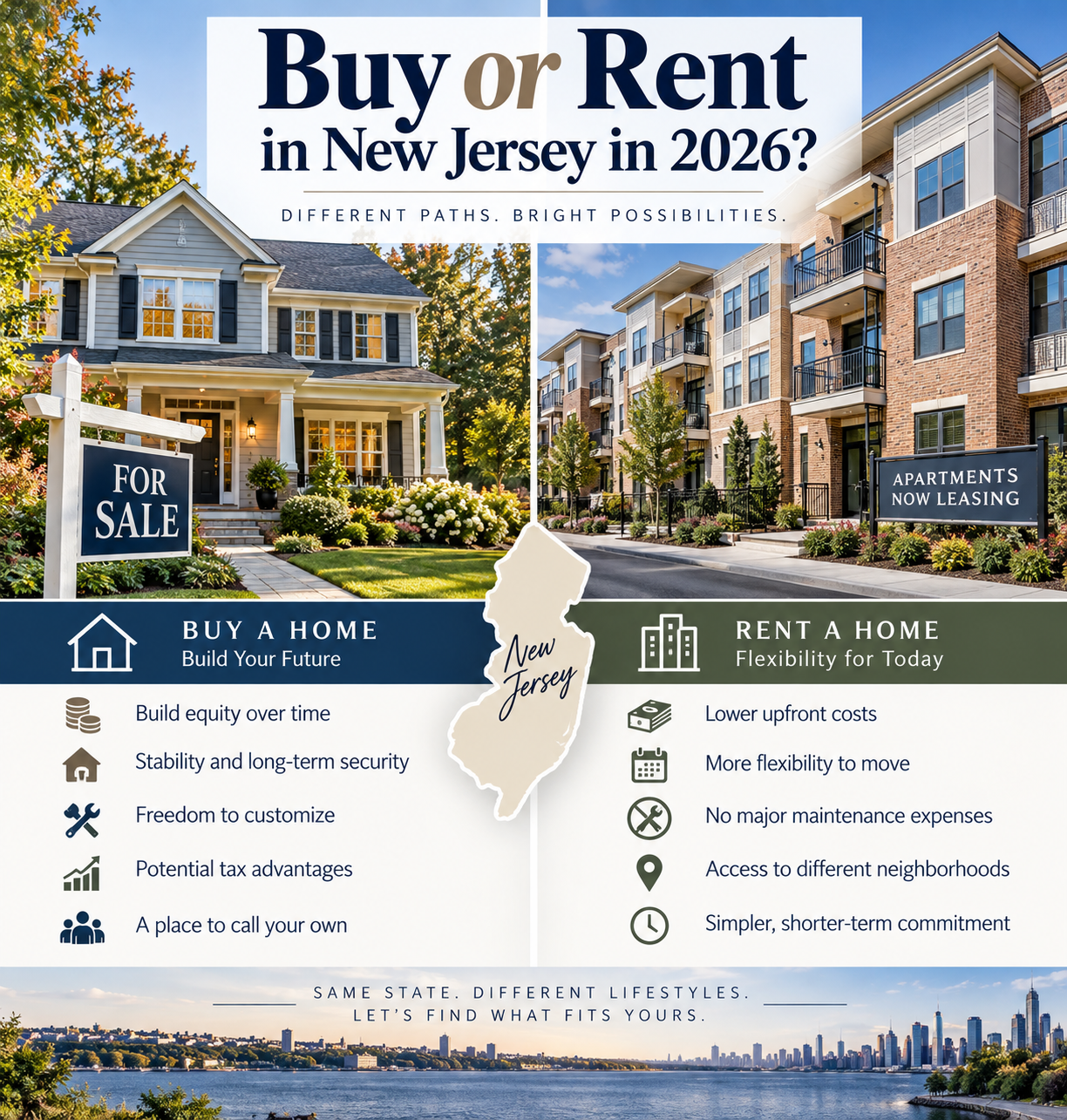
What Does the New Jersey Housing Market Look Like in 2026?
Buying a home in New Jersey remains a significant financial commitment.
As of July 31, 2026, Zillow reported an average New Jersey home value of $584,072, up 3.6% from the previous year. Zillow also reported a statewide median sale price of $540,000 for June 2026. Homes were going pending in approximately 19 days statewide.
Those statewide numbers are useful for context, but real estate varies greatly from one New Jersey community to another. A home in Union County may have a very different price, tax bill, and market pace from a property in Morris, Middlesex, Somerset, or Essex County.
That is why buyers should review local numbers rather than making a decision based on statewide averages alone.
What Does Renting Cost in New Jersey in 2026?
Renting is not necessarily inexpensive either.
According to Zillow's rental data updated September 8, 2026, the average asking rent across all property types and bedroom counts in New Jersey was approximately $2,400 per month. Zillow reported that this was about 20% higher than the national average.
Rental costs can differ significantly by county, municipality, number of bedrooms, property type, and amenities.
For example, Zillow reported an average rent of approximately $2,549 in Middlesex County as of July 31, 2026.
That difference is an important reminder that your decision should be based on the specific communities and types of homes you are considering.
Mortgage Rates Are an Important Part of the 2026 Buying Decision
Home prices are only part of the affordability equation.
As of September 10, 2026, Freddie Mac reported an average 30-year fixed mortgage rate of 6.76% and an average 15-year fixed rate of 6.09%.
Your actual mortgage rate may be different depending on your credit profile, down payment, loan program, lender, and other financial factors.
Because rates directly affect monthly principal and interest payments, buyers should speak with a lender before deciding what price range feels comfortable.
Getting pre-approved can give you a much clearer picture than relying on an online home price alone.

When Buying a New Jersey Home May Make Sense
Buying may be worth considering if you expect to stay in the same area for several years and your finances can comfortably support both the purchase and ongoing ownership costs.
Homeownership gives you an opportunity to build equity as you repay your mortgage, although future home values are never guaranteed.
Buying can also provide greater control over the property. Subject to local rules, association requirements, and other restrictions, homeowners may have more freedom to make improvements or personalize the property than renters typically do.
Buying may be worth a closer look if:
* You plan to remain in the area for several years.
* Your income and employment situation are relatively stable.
* You have funds for a down payment and closing costs.
* You can maintain an emergency reserve after purchasing.
* Your monthly budget can handle taxes, insurance, maintenance, and other ownership expenses.
* You want the potential to build equity over time.
The key word is comfortable. Qualifying for a certain mortgage amount does not necessarily mean spending that amount is the right decision for your personal budget.
When Renting May Make More Sense
Renting can be a practical choice when flexibility matters more than long-term ownership.
If you expect your employment, preferred location, housing needs, or financial circumstances to change in the near future, renting may give you more freedom to adjust.
Renting can also require less cash upfront than purchasing a home. While renters may need a security deposit and other initial expenses, buyers can face a down payment, lender charges, inspection expenses, attorney fees, closing costs, and other transaction costs.
Renting may deserve serious consideration if:
* You may move within the next few years.
* You are building savings for a future purchase.
* You prefer fewer property maintenance responsibilities.
* You are still deciding which New Jersey community works best for your needs.
* Buying would leave you with very little emergency savings.
* Current mortgage payments would stretch your monthly budget too far.
Renting is not simply “throwing money away.” You are paying for housing, flexibility, and fewer ownership responsibilities.
Buying and renting serve different financial and lifestyle needs.

Do Not Compare Rent With Only the Mortgage Payment
This is one of the most important points in any buy-versus-rent comparison.
Suppose a rental costs $2,500 per month. It would be misleading to compare that number only with the principal and interest payment on a mortgage.
A homeowner's monthly and annual expenses may also include:
* Property taxes
* Homeowners insurance
* Mortgage insurance, when applicable
* HOA or condominium fees, when applicable
* Utilities
* Repairs and routine maintenance
* Larger replacement expenses over time
New Jersey property taxes can also vary substantially by municipality.
A proper comparison should look at the total estimated cost of ownership, not simply the mortgage payment.
Buying Comes With Upfront Costs
A down payment is not the only cash buyers should plan for.
Depending on the transaction and loan, buyers may need funds for:
* Down payment
* Home inspection
* Appraisal
* Attorney fees
* Lender and loan expenses
* Title-related costs
* Prepaid property taxes and insurance
* Moving expenses
* Initial repairs or purchases for the home
You also want to avoid using every dollar of available savings to close on the property.
Keeping an emergency reserve can help you handle an unexpected repair or other expense after you receive the keys.
Renting Usually Offers More Flexibility
One advantage of renting is the ability to make a change without selling a property.
That can matter if you are new to New Jersey, testing a commute, considering different towns, or uncertain about where you want to stay long term.
Renting for another year does not necessarily mean putting your plans on hold. It may give you time to improve your credit, build a larger down payment, reduce other debt, or get more familiar with the communities you are considering.
A thoughtful decision is more useful than rushing into a purchase simply because you feel you are supposed to own a home by a certain point.
Buying Can Offer Long-Term Ownership Benefits
A portion of your mortgage payments goes toward reducing the principal balance on your loan.
Over time, this can help build equity. Home values can also rise or fall, so appreciation should never be treated as guaranteed.
Owning can become more appealing for someone who expects to remain in the property long enough to spread the upfront costs of buying across several years.
Time matters because purchasing and eventually selling a home both involve transaction expenses.
If you expect to move again very soon, those costs deserve careful consideration.
Five Questions to Ask Before Deciding
Before choosing between buying and renting in New Jersey in 2026, ask yourself:
1. How long do I expect to stay?
The shorter your expected stay, the more important transaction costs and flexibility become.
2. How much cash would I have left after buying?
Your down payment should not leave you without funds for emergencies, moving costs, repairs, or normal living expenses.
3. What is the complete monthly ownership cost?
Ask a lender for an estimate that includes principal, interest, taxes, homeowners insurance, mortgage insurance where applicable, and HOA fees if the property has them.
4. What would a comparable rental cost?
Compare similar properties in the same area rather than comparing a small apartment with a larger single-family home.
5. Which option fits my plans right now?
Finances matter, but so do timing and flexibility.
The better option is the one that supports both your budget and your current plans.

What Does the 2026 Market Mean for New Jersey Buyers?
The current market creates a real tradeoff.
New Jersey home values remain higher than they were a year ago, while mortgage rates continue to make financing an important part of the affordability calculation. Zillow reported the state's average home value at $584,072 as of July 2026, up 3.6% year over year. Freddie Mac's September 10 survey put the average 30-year fixed mortgage rate at 6.76%.
Renters are facing meaningful costs as well, with Zillow's statewide asking-rent measure at approximately $2,400 in early September 2026.
These numbers do not mean you should automatically buy or automatically rent.
They mean the math should be personal.

Not Sure Whether Buying or Renting Makes Sense for You?
You do not have to make the decision based on headlines or statewide averages.
The numbers can look very different from one New Jersey community to the next. Looking at actual home prices, property taxes, available inventory, rental options, and estimated mortgage payments in the areas you are considering can give you a much clearer answer.
I am a lifelong New Jersey resident, and I help clients understand their options with clear information and steady communication so they can make a decision that feels right for their goals.
Thinking about buying, renting, or making a move in Union, Morris, Middlesex, Somerset, or Essex County? Let’s look at your options together and talk through what makes sense for you.
Contact Christine Cederquist to talk about what you're looking for and start reviewing New Jersey luxury homes that fit your goals.
Christine Cederquist
Realty ONE Group
Phone: +1 908-380-3555
Email: CederquistRealty@gmail.com
Ready to talk about what you are looking for? Reach out and let’s create a focused home-search plan.
Market statistics are snapshots and can change. Mortgage rates also vary by borrower and lender. This article is provided for general real estate education and is not mortgage, tax, legal, or financial advice. Buyers and renters should confirm current costs and seek guidance appropriate to their individual circumstances.
FAQs
Is it cheaper to rent or buy in New Jersey in 2026?
It depends on the property, municipality, down payment, mortgage rate, taxes, insurance, rental price, and how long you plan to stay. Compare the total ownership cost with a comparable rental before making a decision.### Is 2026 a bad year to buy a home in New Jersey?
Is 2026 a bad year to buy a home in New Jersey?
There is no single good or bad year that applies to every buyer. A purchase can make sense when the home fits your budget, your finances are ready, and you plan to remain long enough for ownership to fit your goals.
How much is the average rent in New Jersey in 2026?
Zillow reported an average asking rent of approximately $2,400 across all bedrooms and property types in New Jersey as of September 8, 2026. Individual communities and property types can be significantly higher or lower.
What should I do before deciding whether to buy?
Review your savings, credit, debt, expected timeline, preferred locations, current rental costs, and estimated ownership expenses. Speaking with both a lender and a local real estate professional can also help you work with numbers specific to your situation.